
When Victoria Ndafapawa Elias left her corporate career, she thought her next move would be straightforward. With years of experience in finance and stockbroking, she believed finding another job would be relatively easy. Instead, every application led nowhere.
“I quit because I felt there was more that I could offer,” she recalls. “I believed I would find another job quickly because I was highly qualified and experienced, but it didn’t happen.” That unexpected setback became the beginning of something far greater.
Today, Victoria is the founder of Smart Money with V, an innovative financial education business based in Postmasburg in the Northern Cape. Through workshops, entrepreneurship programmes and an award-winning Smart Money Quiz Financial Literacy Board Game, she is helping entrepreneurs, young people and communities develop the financial knowledge needed to make better decisions, build sustainable businesses and create long-term wealth.
Her innovative approach recently earned her second place in the Market Growth Award Category of the Women Creating Wealth Financial Services Growth & Impact Challenge, securing R175 000 to accelerate the next phase of her business. For Victoria, the award represents something much bigger than funding. “It’s validation that the work we’re doing matters,” she says. “It tells me that financial education can be delivered differently – and that innovation has a place in helping people build better financial futures.”
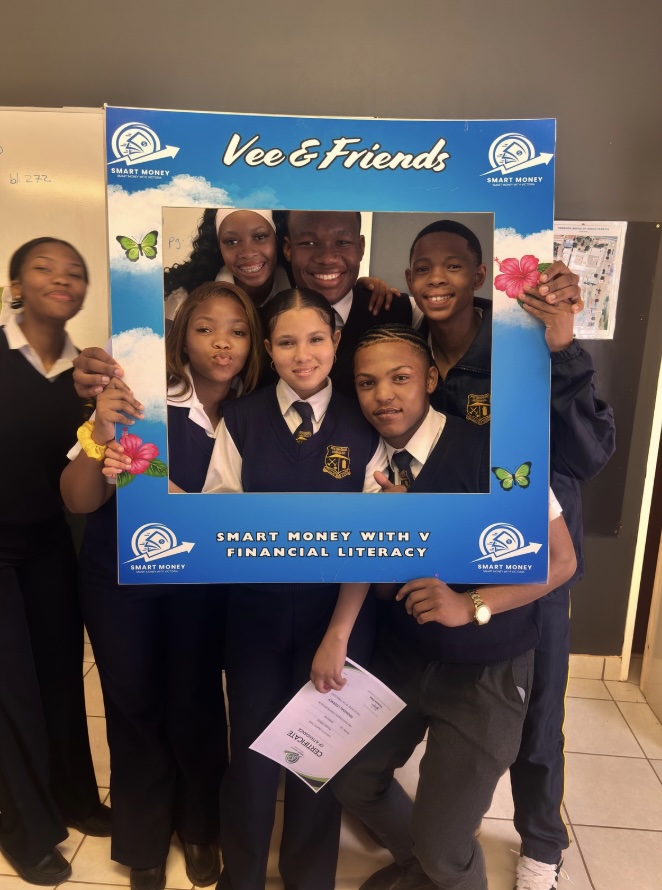
Postmasburg High School students complete finance and career choices workshop delivered by Smart Money with V.
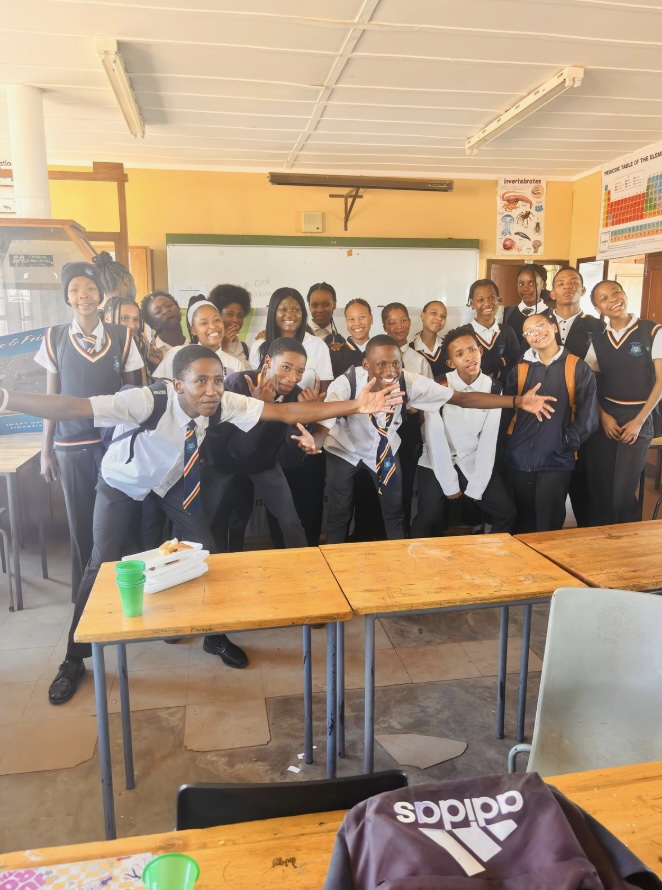
Hoërskool Blinkklip High School students complete entrepreneurship and business workshop delivered by Smart Money with V.
Leaving the corporate world forced Victoria to rethink what an accounting business could become. Initially, she offered traditional accounting services to individuals and small businesses. However, operating in a small mining town where many entrepreneurs struggled with cash flow meant clients often needed financial guidance long before they could afford accounting services. “Accounting is just accounting,” she says. “But how do you make it different?”
That question encouraged her to look at things differently. Instead of limiting herself to bookkeeping and compliance, Victoria began developing financial management workshops for entrepreneurs, women in business and community organisations. The more she taught, the more she realised that people learned best when financial concepts were practical, engaging and accessible. She designed a financial literacy board game that teaches everything from budgeting, debt management and investing to entrepreneurship, trading, grants and business planning through interactive play.
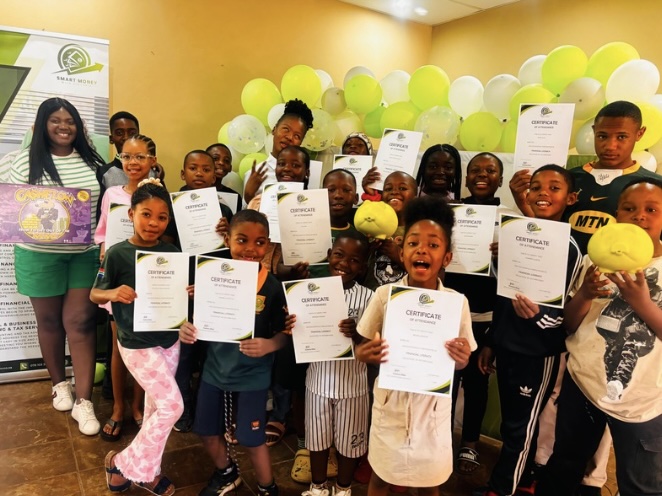
Rules of Money for Kids workshop: Smart Money with V delivers money management learning.
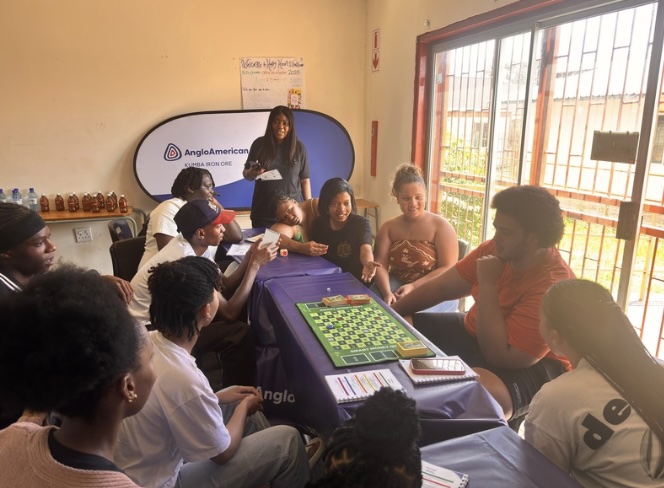
Smart Money with V hosts Anglo American for six day money management workshop for university students.
The game has already been used in workshops with entrepreneurs, university students and community groups, while discussions are underway to explore how it could complement classroom learning by helping learners better understand financial literacy through play. Victoria has also expanded her work beyond entrepreneurs. She runs financial literacy programmes for children as young as six, introducing money management, saving and entrepreneurship from an early age. Teenagers are challenged to develop and pitch business ideas, while university students use the board game to explore budgeting, responsible borrowing, investing and business decision-making. “We know employment is not guaranteed,” she says. “If young people start thinking entrepreneurially while they’re still at school, they create opportunities for themselves instead of waiting for opportunities to come.”
Although Smart Money with V had already begun evolving, Victoria says the Women Creating Wealth programme fundamentally changed how she viewed her business. Like many entrepreneurs, she initially found the programme demanding.
“I realised very quickly that this wasn’t just another programme,” she says. “It’s intense, and there were moments when I thought about giving up.” Her breakthrough came when she stopped seeing the programme as coursework and started applying every lesson directly to her business. “The moment you change your mindset, everything changes,” she explains. “You need to be willing to learn and implement. That’s where the transformation happens.”
One tool in particular, reshaped the future of her business: the Business Model Canvas.
“It helped me structure everything,” she says. “Even though I’ve diversified into different services, it all connects back to one purpose. It’s still finance. It’s still accounting – just delivered in different ways.” That clarity enabled Victoria to build a stronger growth strategy, expand her marketing efforts and position herself for new opportunities.
Since completing the programme, she has secured regular radio interviews promoting financial literacy, expanded partnerships, increasing her visibility through television and media engagements, and grown her business from operating alone to leading project teams of up to ten specialists, depending on the size of each assignment.
Winning second place in the Market Growth Award Category marks another milestone in that journey. For Victoria, the funding is more than recognition of what she has achieved – it is an investment in what comes next. “I’ve developed the concept, but I haven’t been able to print and commercialise it because of funding constraints,” she explains. “This funding will help me move the board game from concept to product so that more people can benefit from it.”
Victoria wants to see financial literacy become a life skill. “Financial literacy shouldn’t only start when you’re an adult,” she says. “If we can teach people to understand money from a young age, we can change how families, businesses and communities build wealth for generations.”
Authors:
Author
