
“Resilience cannot be achieved by investing only in infrastructure, technology or finance. We must also invest in the people who manage resources, sustain livelihoods and drive local economies. If women cannot access finance, technology, markets, information and decision-making, resilience investment will not reach its full potential. This is why women must not be added to drought investment plans at the end. They must be part of designing them from the beginning.”
— Shiphra Chisha, Chief Executive Officer, Graça Machel Trust
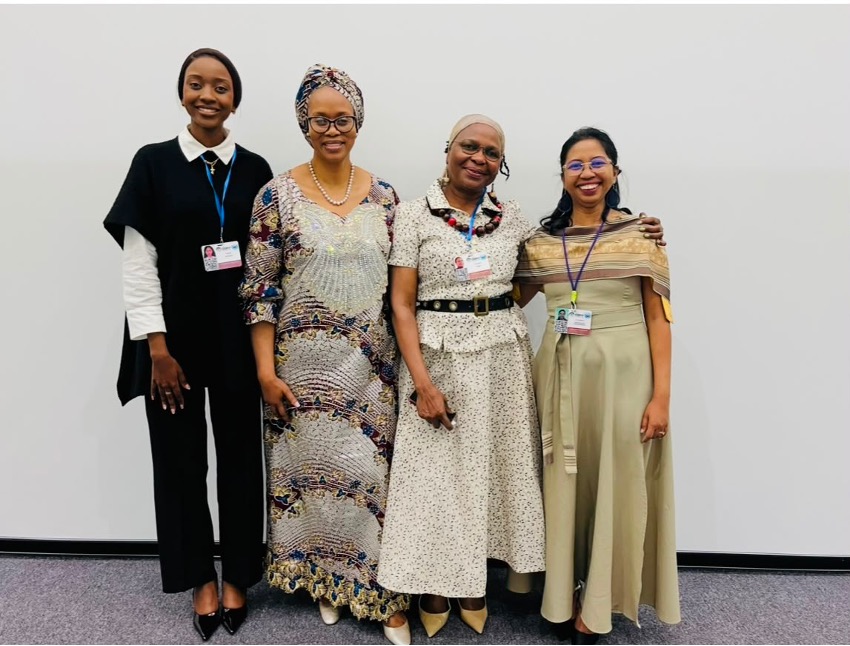
Shiphra Chisha, Chief Executive Officer of the Graça Machel Trust, with network representatives Andreia Mondlane of Mozambique Women of Energy, Dr Hesphina Rukato of Zimbabwe and Zo Harinoro Rabenirina of Madagascar at UNCCD COP17. Together, they brought strategic leadership, country experience, and women’s perspectives to discussions on drought resilience, land restoration, and climate finance.
At the recently concluded 17th Conference of the Parties to the United Nations Convention to Combat Desertification in Mongolia, the Graça Machel Trust contributed to discussions on inclusive drought resilience and climate finance, calling for women, youth and local communities to be recognised as partners in shaping solutions.
The Trust’s message was that drought resilience is stronger when those most affected help guide planning and investment decisions. Shiphra Chisha’s keynote reinforced this by placing women’s agency, local knowledge and investment decision-making at the centre of the conversation.
Through its network approach, the Trust brought women network members from AIKA Madagascar, Mozambique Women of Energy and the African Women in Agribusiness Network in Zimbabwe into the COP17 discussions, ensuring that policies and investments are informed by realities on the ground.
Their participation reflected the Trust’s network approach in action: creating pathways for women closest to drought, land and climate challenges to bring their country experiences, technical knowledge and community priorities into global discussions on resilience and climate finance.
“Through networks, women are not only represented but can collectively identify priorities, share evidence and experiences, influence policy discussions and advocate for solutions that respond to realities on the ground.”
— Temitope Ogunlela, Senior Programme Officer, GMT Networks
The Trust’s contribution was also reflected in the COP17 side event, Inclusive Drought Resilience: Gender, Youth and Investment. The discussion moved beyond seeing women, youth and vulnerable groups only as recipients of support. It positioned them as people with knowledge, agency and practical solutions that can make resilience investments more relevant, effective and sustainable.
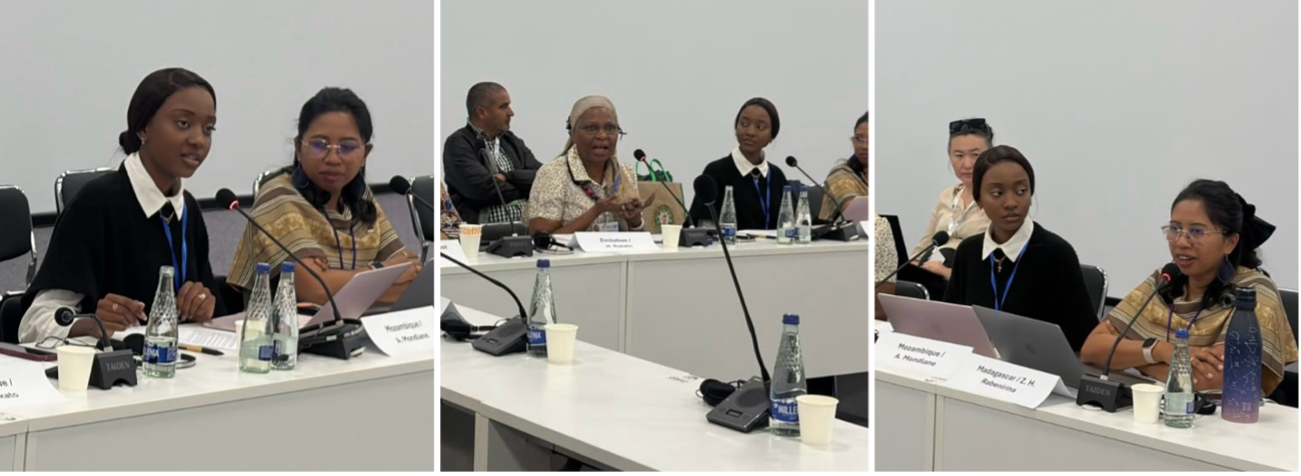
Andreia Mondlane of Mozambique Women of Energy, Dr Hesphina Rukato of Zimbabwe and Zo Harinoro Rabenirina of Madagascar contributed country experience and practical insight during the COP17 discussion on inclusive drought resilience, gender, youth and investment.
Andreia Mondlane, a climate and energy specialist and member of Mozambique Women of Energy, brought experience at the intersection of renewable energy, gender inclusion and sustainable development. She drew attention to a practical part of resilience that is often overlooked: energy access.
“Energy access has to be part of the drought resilience conversation because it underpins so many of the systems communities rely on during periods of water stress, from pumping and irrigation to food preservation, communication and local enterprise.”
— Andreia Mondlane, Mozambique Women of Energy
Andreia also pointed to a deeper issue: women cannot be expected to lead community resilience while barriers to finance, infrastructure, markets and decision-making remain unresolved. She added: “When women have those tools, they are better positioned not only to cope with climate shocks, but to build and scale the practical energy, water and livelihood solutions their communities depend on.”
Zo Harinoro Rabenirina of Madagascar brought a food systems and livestock perspective. As a lecturer-researcher at the Higher School of Agronomic Sciences at the University of Antananarivo, her work focuses on livestock systems and the transformation of food systems in tropical contexts. She grounded the conversation in the daily realities of Madagascar’s Great South, where drought affects far more than rainfall.
“I want decision-makers to understand that drought is not only about low rainfall. In Madagascar’s Great South, it’s about daily choices that no family should have to make: whether to use scarce water for drinking, cooking or animals; whether a child can remain in school; whether a young person must leave home to find work; and how a mother can feed her family.”
— Zo Harinoro Rabenirina, Madagascar
Zo’s reflection pointed to the everyday work women already do to keep families and communities resilient. Women manage food, water, seeds, livestock and household survival, while carrying practical knowledge of drought-tolerant crops and ways to protect family income and food security, adding: “We should not see women only as beneficiaries of drought programmes. We should recognise them as farmers, livestock keepers, entrepreneurs, innovators and investment partners. That is how resilience becomes visible, supported and scalable.”
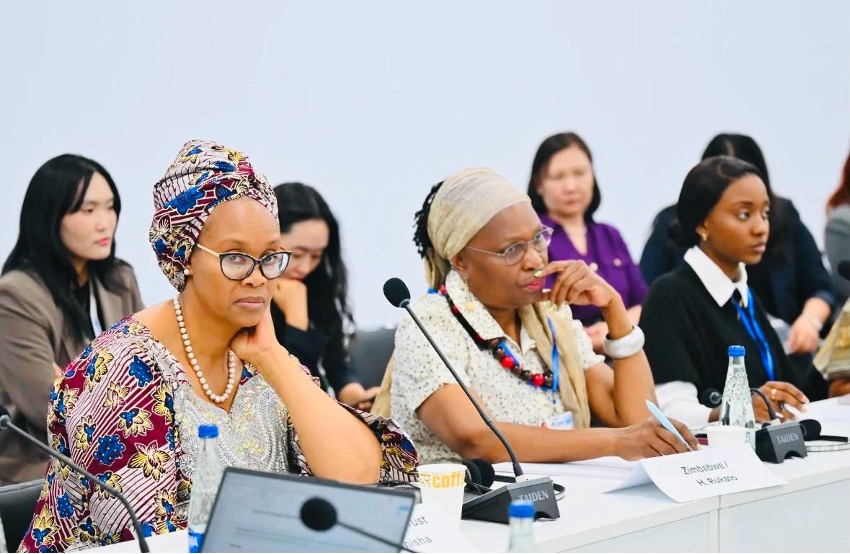
Shiphra Chisha and Dr Hesphina Rukato during COP17 discussions on drought resilience, land restoration and climate finance.
Dr Hesphina Rukato of Zimbabwe brought a Pan-African development, governance and human security lens to the conversation. With experience across environment, climate change, development, governance, peace and security, she connected drought resilience to wider questions of survival, justice and Africa’s development future.
“Drought resilience is not simply an environmental issue, but rather an existential one. As desertification intensifies, so do risks to health, livelihoods, infrastructure and biodiversity.”
— Dr Hesphina Rukato, Zimbabwe
Her reflection reinforced one of the Trust’s central messages: women must not only be consulted. They must help decide where climate-resilience investments go, how resources are used and how solutions are implemented. She added: “Women should not just be viewed as beneficiaries of climate resilience investments. They should be seen as the main architects of climate resilience investments.”
Together, these voices showed why the Graça Machel Trust contributes to global spaces such as COP17. The Trust is helping shift the conversation from vulnerability to agency, from consultation to decision-making, and from climate plans to investments that reach the people already leading resilience on the ground.
Africa needs more than better drought response plans. It needs financing models that recognise local knowledge, reduce risk, support women’s enterprise and strengthen community-led solutions.
“We must not leave COP17 with better plans alone. Let us leave with better investment decisions.”
— Shiphra Chisha, Chief Executive Officer, Graça Machel Trust
The Trust’s call is simple: climate resilience investments must be shaped with women, youth and communities from the start. Through its network approach, the Trust helps women leaders across Africa bring their evidence, experience and solutions into the spaces where climate resilience decisions are made.
Authors:
About The Author
