
The Graça Machel Trust’s Women Creating Wealth Financial Services Country Forum, convened in partnership with FASSET (the Finance and Accounting Services Sector Education and Training Authority), brought entrepreneurs, investors, and financial-sector partners together in Johannesburg on 26 June 2026 to mark the close of a three-year programme and to make the case that supporting women-owned businesses is not charity. It is an economic strategy.
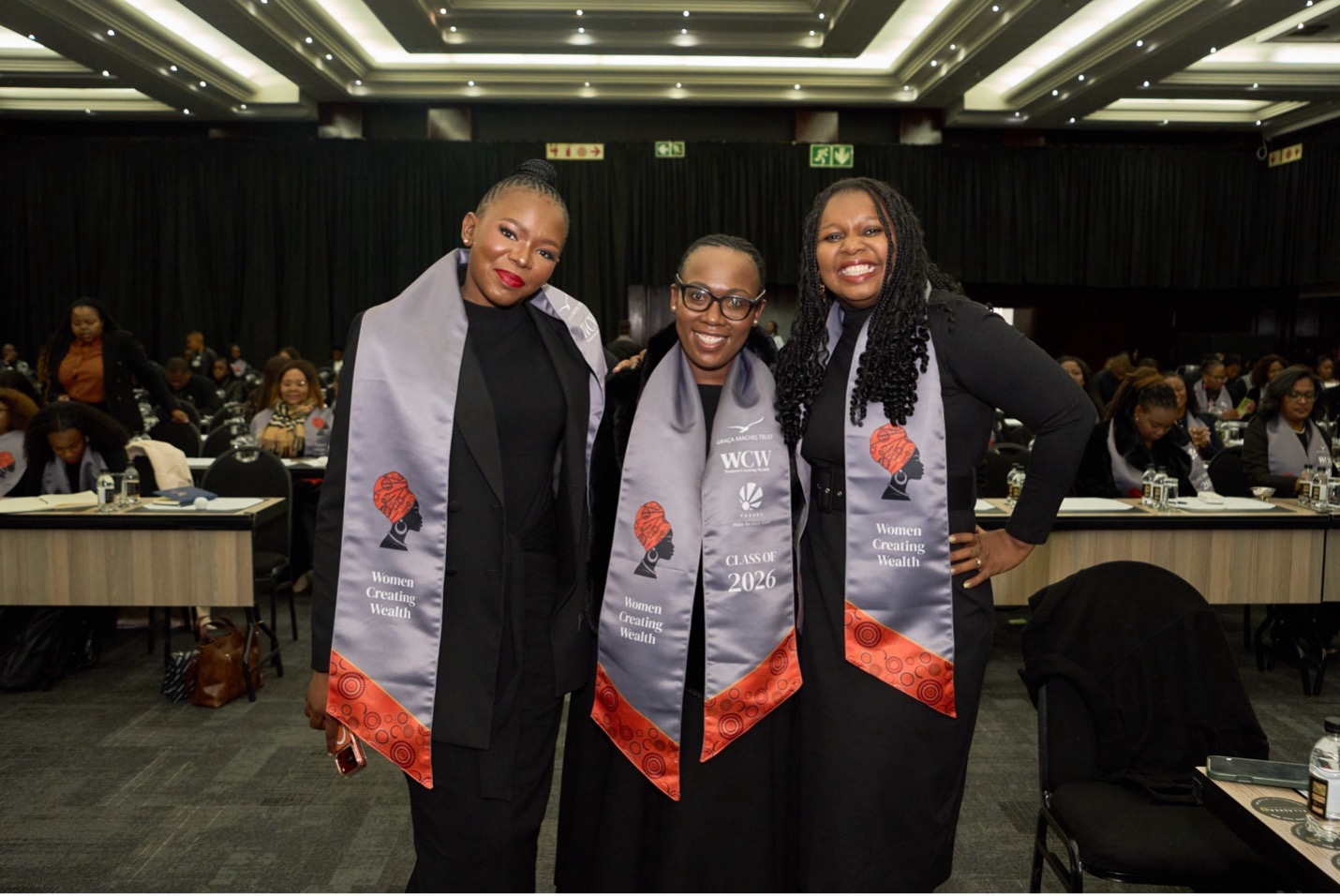
In South Africa, women are running businesses, creating jobs, servicing markets and sustaining households. Yet the systems around them, including financial products, procurement processes and capital allocation, have too often been designed as though women are peripheral to the economy rather than central to it. The Women Creating Wealth Financial Services Programme set out to change that. Friday’s Forum was both a reckoning with how far this work has come and a call to action for what must come next.
The Forum celebrated the women entrepreneurs who completed the programme, launched the Women Creating Wealth Impact Book, and shared findings from the Status of Women’s Financial Inclusion in South Africa research report. Above all, it renewed a single call: an economy where women can access capital, shape markets, and build long-term wealth.
Opening the Forum, Shiphra Chisha, former Director of Programmes and CEO Designate of the Graça Machel Trust, said the work must go beyond supporting individual women and focus on changing the systems that shape their choices, opportunities and futures.
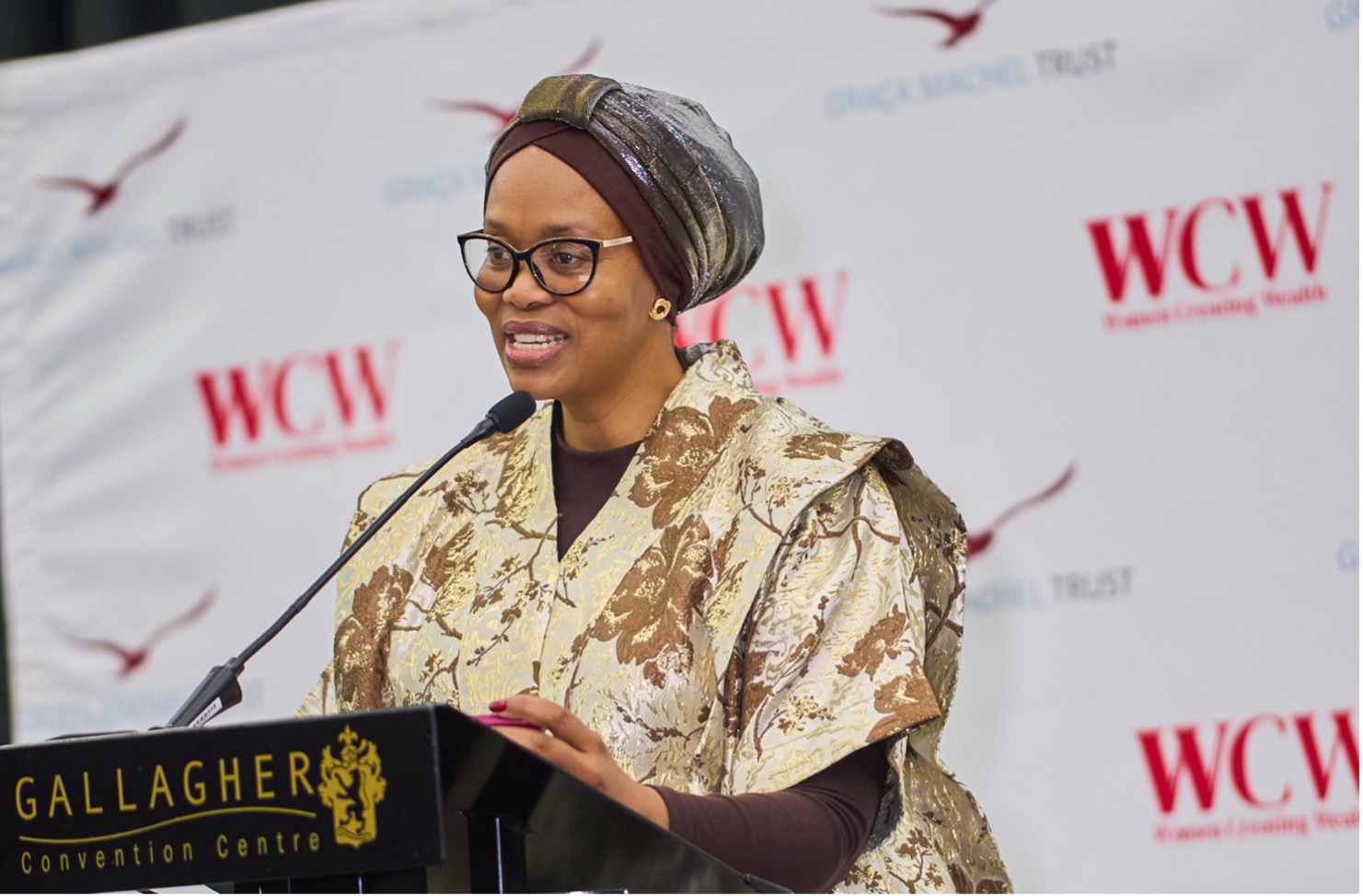
Shiphra Chisha addresses entrepreneurs, partners, and financial sector leaders at the Women Creating Wealth Financial Services Country Forum in Johannesburg.
“Our mission has never been only to support women as individuals. Our mission is to transform the systems that shape their choices, opportunities and futures.” She said. The Women Creating Wealth Financial Services Programme was created to respond to barriers that continue to limit women-owned businesses: restricted access to finance and markets, limited professional networks, gaps in practical business support, and systems that often fail to reflect women’s realities.
Building on this mandate, Korkor Cudjoe, Senior Manager of the Entrepreneurship Programme at the Trust, presented the programme’s results. Through coaching, mentorship, market access support, and enterprise development, the programme reached more than 600 women-led businesses across South Africa over three years.
The most significant shift was internal: 90% of participants reported increased confidence, leadership capability, and entrepreneurial identity, with 84% attributing this growth directly to the programme. Businesses with strong management systems rose from 28% at the start of the programme to 78% by the end of the programme. Entrepreneurs went on to secure or pursue market opportunities worth approximately ZAR 45 million.
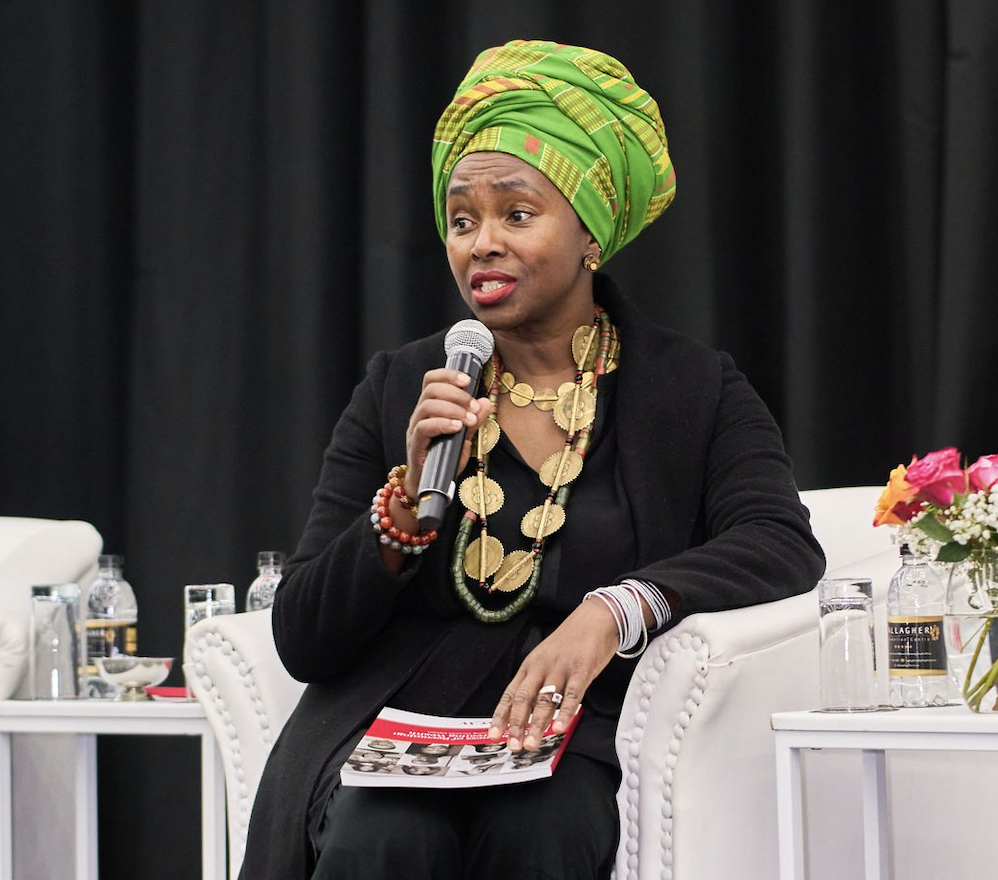
Korkor Cudjoe presents the results of the Women Creating Wealth Financial Services Programme, highlighting the progress made by women-led businesses across South Africa.
“We cannot ask women entrepreneurs to thrive in systems that were not designed with their realities in mind. Wealth creation requires resilience building, business readiness and an ecosystem that opens access to finance, markets and opportunity.” – Korkor Cudjoe, Senior Manager, Entrepreneurship, Graça Machel Trust.
The entrepreneurs’ stories brought these results to life. In the panel discussion, Voices of Transformation: Entrepreneur Success Stories, women business owners reflected on what it takes to recover from setbacks, build confidence, find the right support, and keep going.
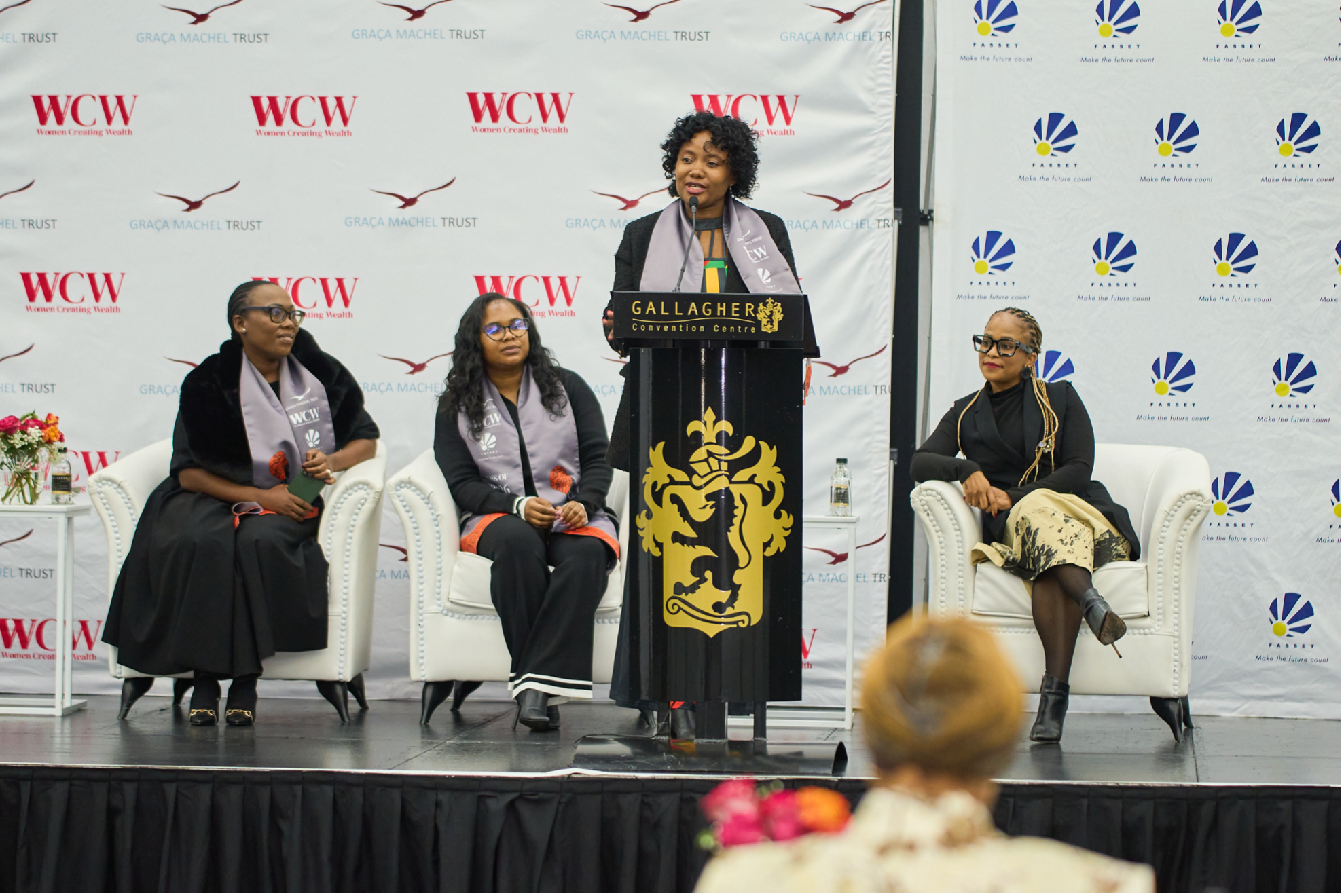
Entreprenuers in the Voices of Transformation: Entrepreneur Success Stories panel share reflections on confidence, resilience, business growth and the value of targeted support.
For Melisa Tyali, Founder of Westrand Cash Loans, the support restored her confidence at a time when she was close to giving up. “Sometimes the biggest investment you can make in an entrepreneur’s life is not money. It is belief.”
For Yolanda Lekota, Founder of Philadi Capital, the programme helped her rebuild after business failure and turn her technology idea into a stronger route to financial inclusion. “What I failed to do in five years, I managed to do in one year because of this programme.”
Ncumisa Mkunqwana, Founder of Chapu Chartered Accountants, reflected on the wider value of growing a business that creates opportunities for others. “As we build, we are lifting others.”
For Palesa Shakwane, Founder of PM Counselling Services, the experience helped her step fully into leadership. “I am now confident to call myself a leader. I am now confident to say that I am the managing director of my practice.”
These shifts did not happen in isolation. Throughout the programme, technical coaches walked alongside the entrepreneurs, offering practical guidance, accountability and encouragement as they strengthened their businesses and stepped more fully into leadership. Technical coach Brenda Hurudza said this growth in confidence was one of the programme’s clearest outcomes. “The biggest shift for me, especially as a coach, was confidence. It was not only about growing a business. I saw people grow from ordinary business owners into growth-ready leaders.”
Partner reflections placed the entrepreneurs’ journeys within a broader economic frame. Ayanda Mafuleka, Chief Executive Officer of FASSET, reminded the room that women must be recognised as central economic actors, not passive recipients of support.
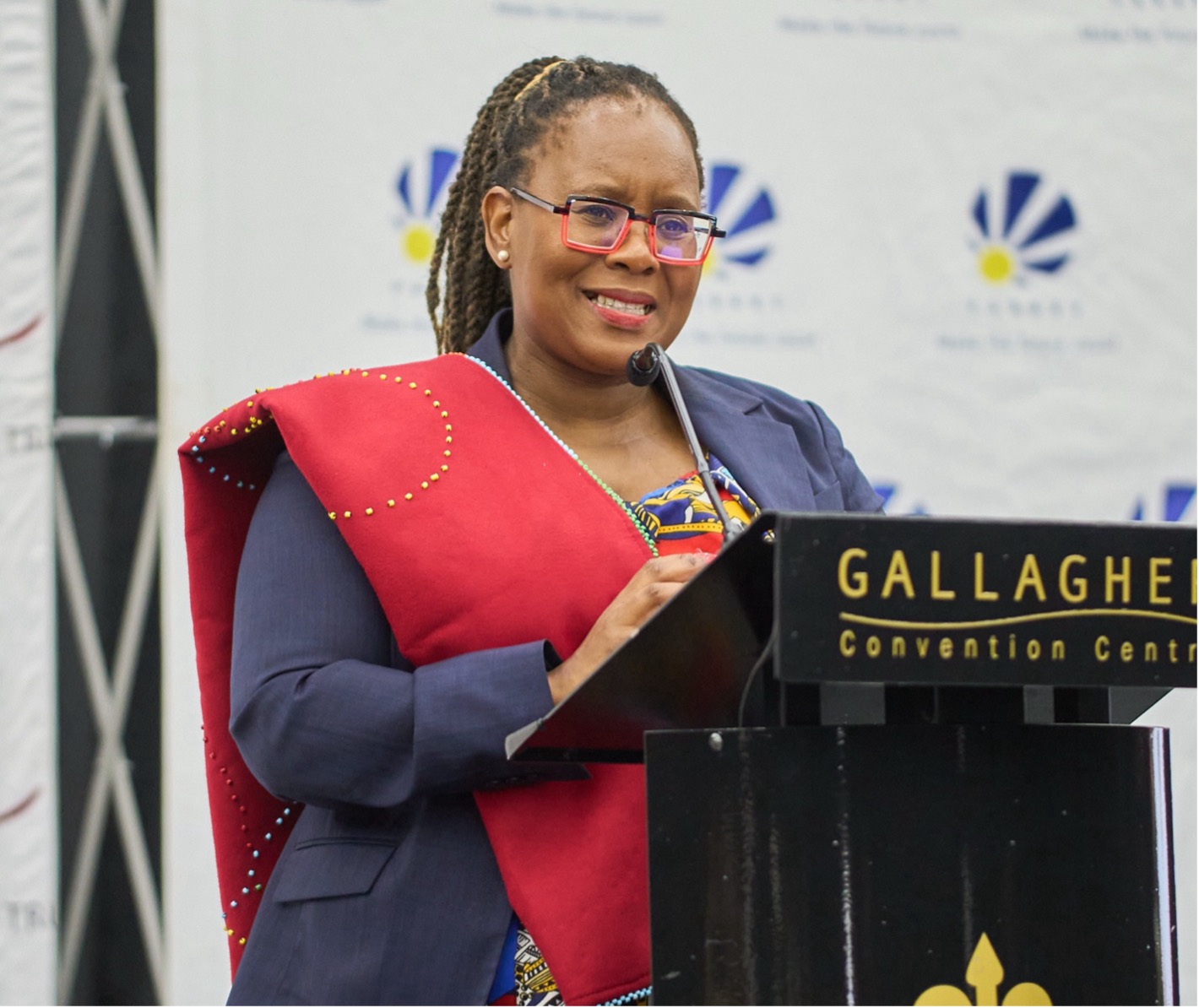
Ayanda Mafuleka, Chief Executive Officer of FASSET, reflects on the power of partnership and the economic impact created when women entrepreneurs are supported to grow and lead.
“You are not passive recipients of assistance. You are economic actors. You are entrepreneurs, employers, innovators, investors and exporters.” – Ayanda Mafuleka, Chief Executive Officer, FASSET.
The official presentation and handover of the State of Women’s Financial Inclusion in South Africa report gave the Forum a clear evidence base for the work ahead. Presented by Tendai Mugabe, Director of Programmes at New Faces New Voices South Africa – a Graça Machel Trust network – the report examined the barriers women face across the financial ecosystem and called for a shift from access alone to economic agency, ownership and wealth creation.
The study found that while access to banking has improved, meaningful financial inclusion remains limited. Women rely heavily on informal financial mechanisms such as stokvels and burial societies, which are critical pillars of financial resilience yet operate without adequate protection, governance, or regulatory clarity. Structural barriers, including marriage regimes, spousal consent norms, gendered financial decision-making, and product designs that do not reflect women’s income realities, limit women’s financial agency at every income level.
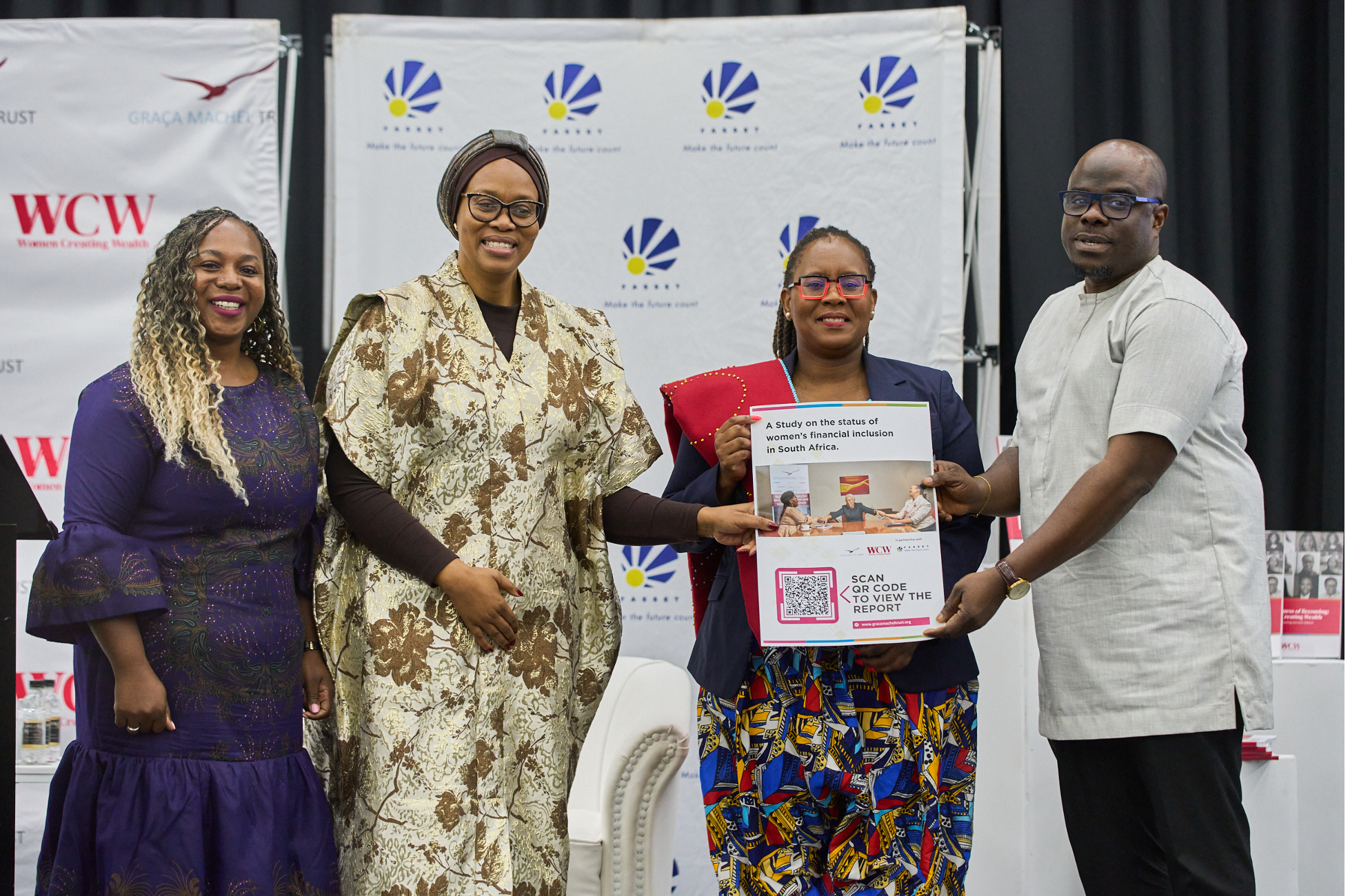
From left to right: Tendai Mugabe of New Faces New Voices South Africa, Shiphra Chisha of the Graça Machel Trust, Ayanda Mafuleka of FASSET, and Temitope Ogunlela of the Graça Machel Trust mark the handover of the State of Women’s Financial Inclusion in South Africa report.
“Women must be positioned not only as users of financial services, but as owners, investors, decision-makers and builders of wealth.” – Tendai Mugabe, Director of Programmes, New Faces New Voices South Africa.
A keynote address on women, finance and the economy, delivered by Namhla Mniki, Head of the Accelerator for Digitally Enabled MSME Finance for Women and Youth and Co-Chairperson of WECONA, widened the call. She argued that women’s financial inclusion is an economic imperative, not a side issue.
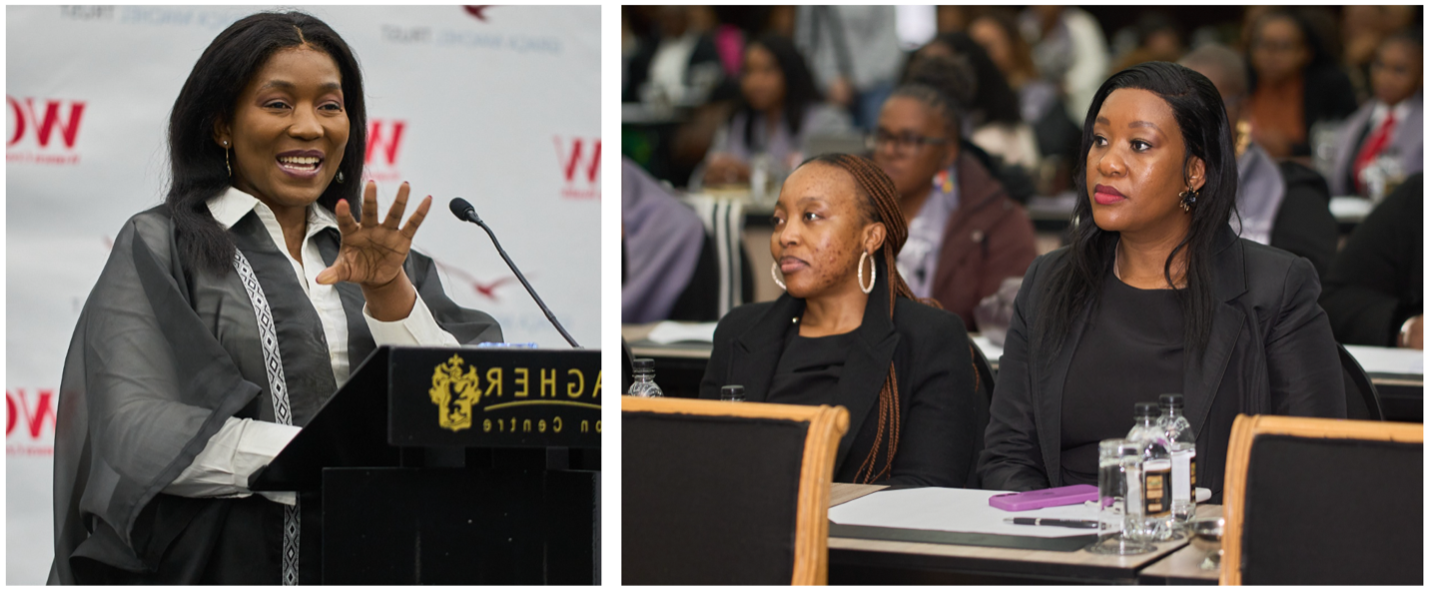
Namhla Mniki, Head of Accelerator for Digitally Enabled MSME Finance for Women and Youth and Co-Chairperson of WECONA, delivers the keynote address on women, finance and inclusive economic growth.
“When women-owned businesses cannot access finance, secure procurement opportunities, build assets or scale their enterprises, the loss is not borne by women alone. Households, communities, industries, and the national economy carry it.” – Namhla Mniki, Head: Accelerator for Digitally Enabled MSME Finance for Women and Youth; Co-Chairperson, WECONA, The Presidency, South Africa.
One of the defining moments of the Forum was the announcement of the winners of the Women Creating Wealth Financial Services Growth Catalyst and Innovation Challenge. The Challenge recognised 15 women-led enterprises, awarding a total of R2.5 million across the categories of Financial Growth, Market Growth, Operational Excellence, Employment Impact, and Leadership and Impact.
The awards celebrated not only the winners, but every entrepreneur who stepped forward to showcase their ambition, enterprise and contribution to their communities.
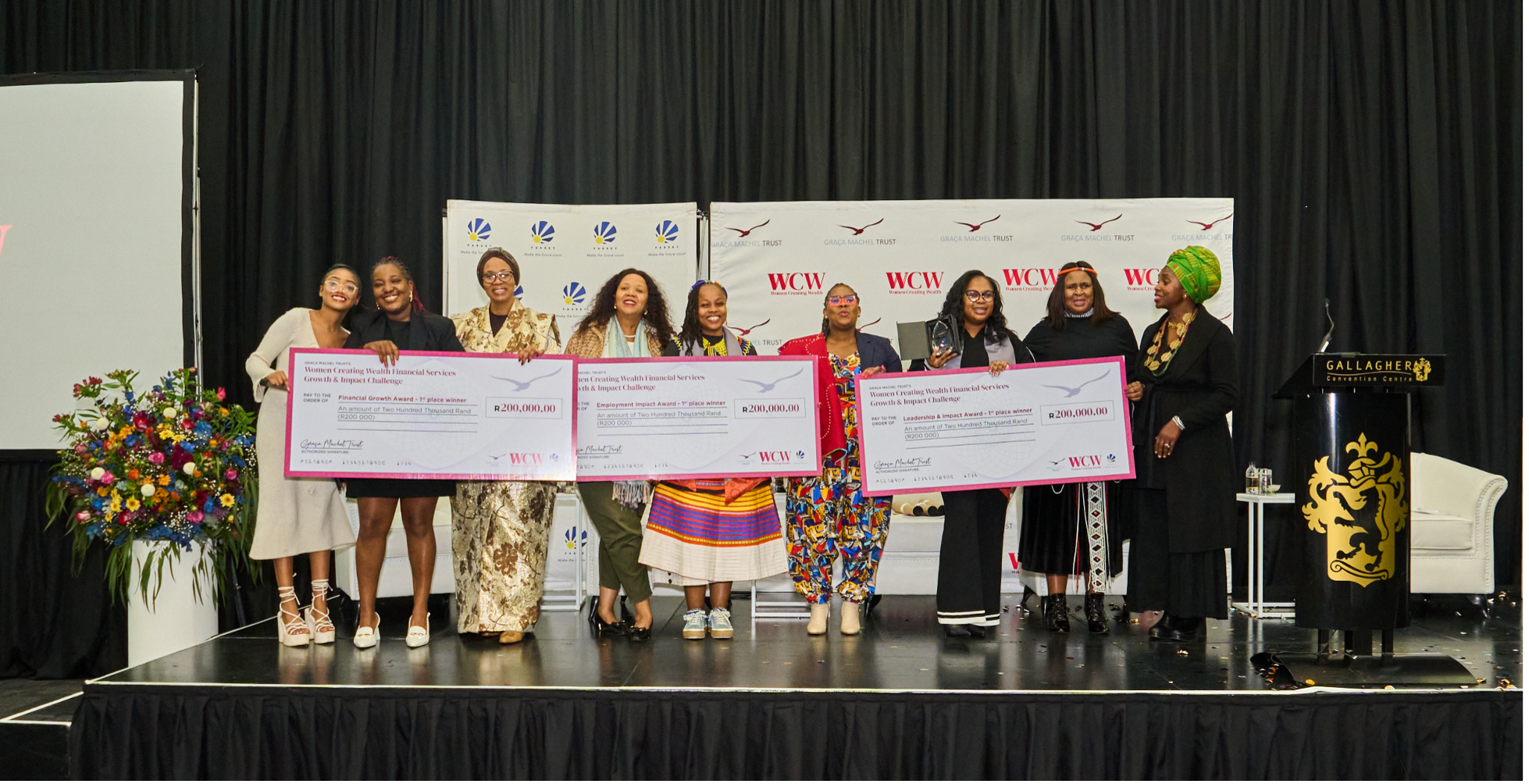
The first-prize recipients of the Women Creating Wealth Financial Services Growth Catalyst and Innovation Challenge celebrate their awards: Octavavia Mthembu of KJZ Financial and Advisory Services for Financial Growth; Mpelegeng Magoro of Lelos Tasty Foods for Market Growth; Nicole Abrahams of VA Lookup for Operational Excellence; Apleni Asanda of Kidlinks Small Farm Incubator for Employment Impact; and Yolanda Lekota of Philadi Capital for Leadership and Impact.
The Forum also marked the launch of the Women Creating Wealth Impact Book. This publication captures the stories, achievements, challenges and transformation journeys of participating entrepreneurs. The book serves as both a celebration of impact and a knowledge product that contributes to broader conversations on women’s entrepreneurship, ecosystem development and economic inclusion within the financial services sector.
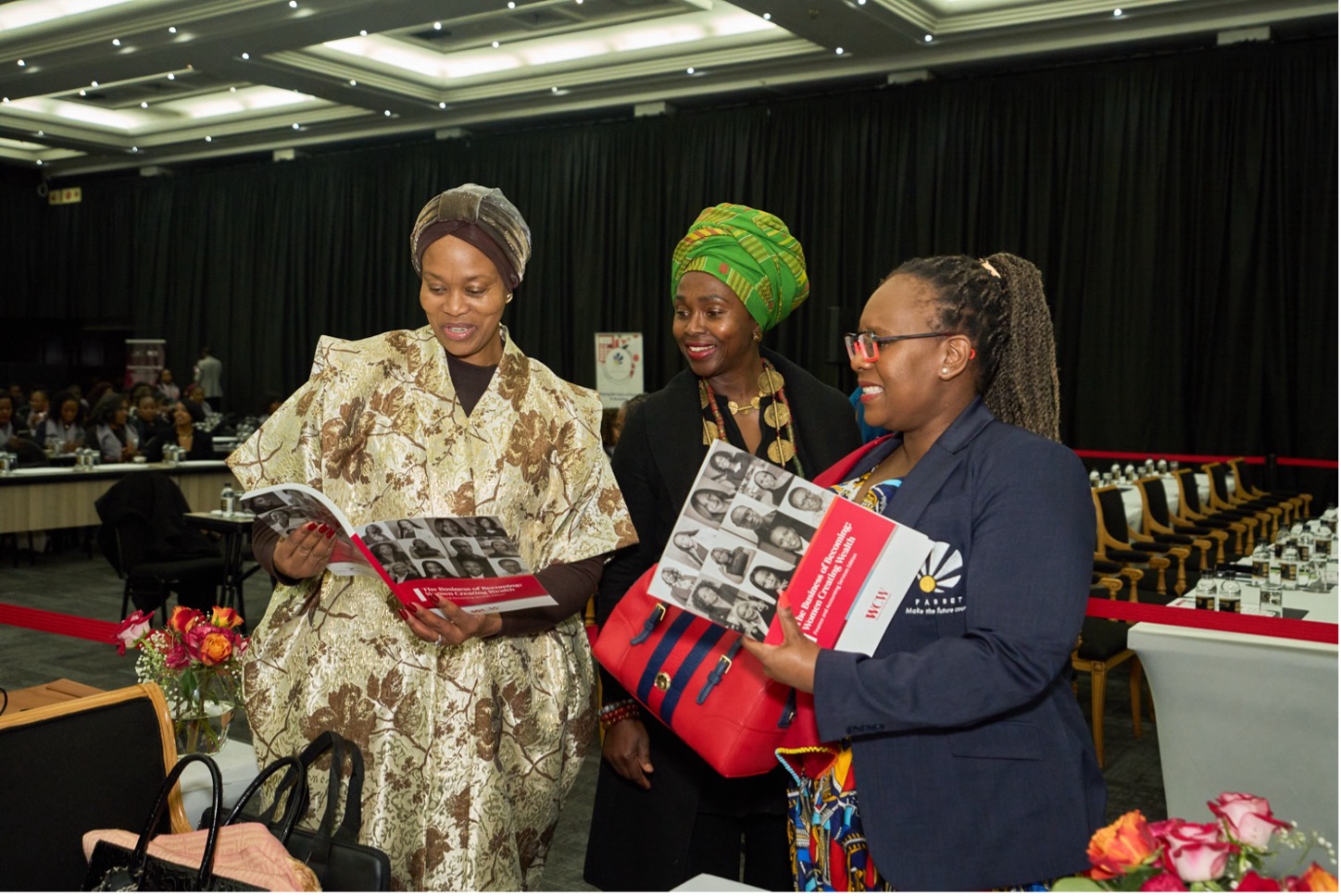
Shiphra Chisha (GMT), Korkor Cudjoe (GMT) and Ayanda Mafuleka (FASSET).
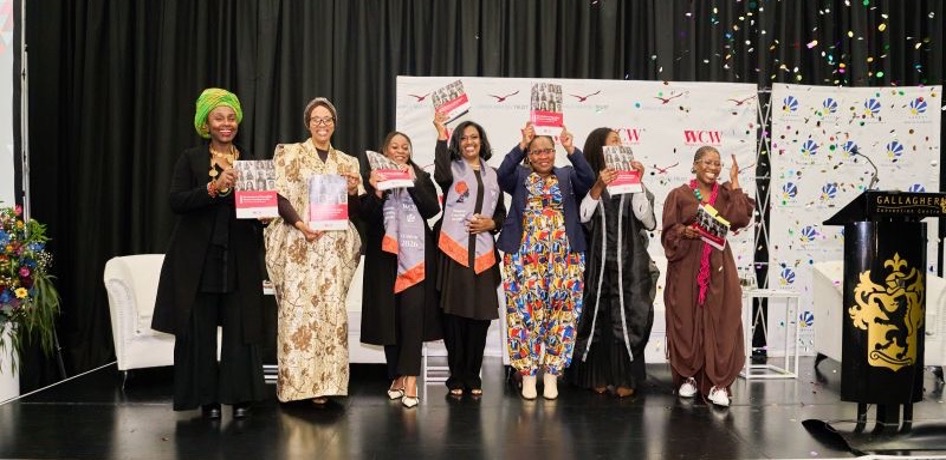
The Graça Machel Trust and its partners celebrate the launch of the Women Creating Wealth Impact Book, which documents the journeys and achievements of participating women entrepreneurs.
The fireside conversation, Women at the Centre: Enterprise Growth, Financial Inclusion and the Ecosystem We Build, brought together the day’s central themes: women need more than encouragement. They need responsive financial systems, accessible markets, practical support, strong networks and a seat at the tables where economic decisions are made.
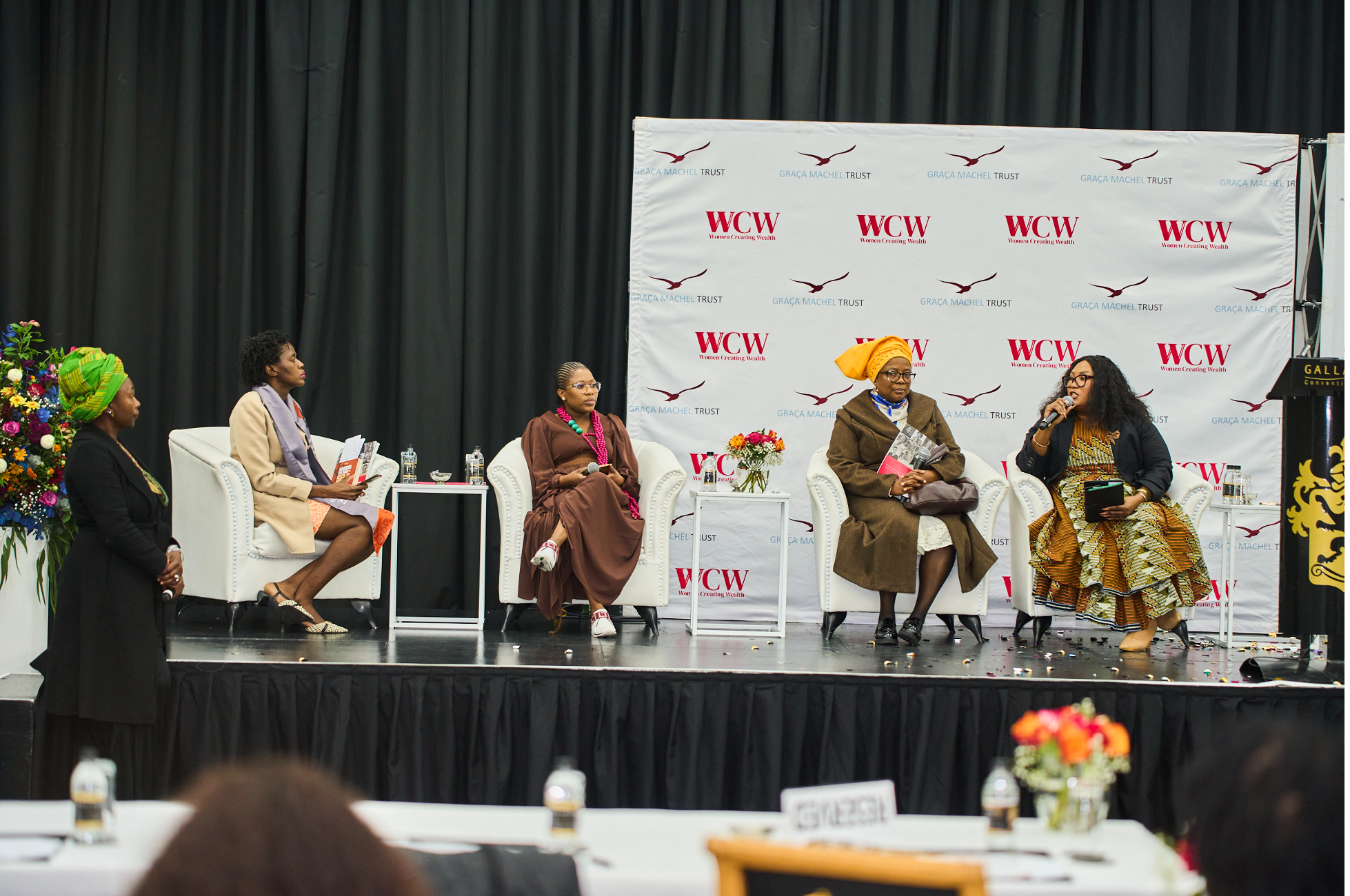
Entrepreneurs and the financial inclusion ecosystem discuss how inclusive finance, practical support and stronger partnerships can help women-led businesses grow.
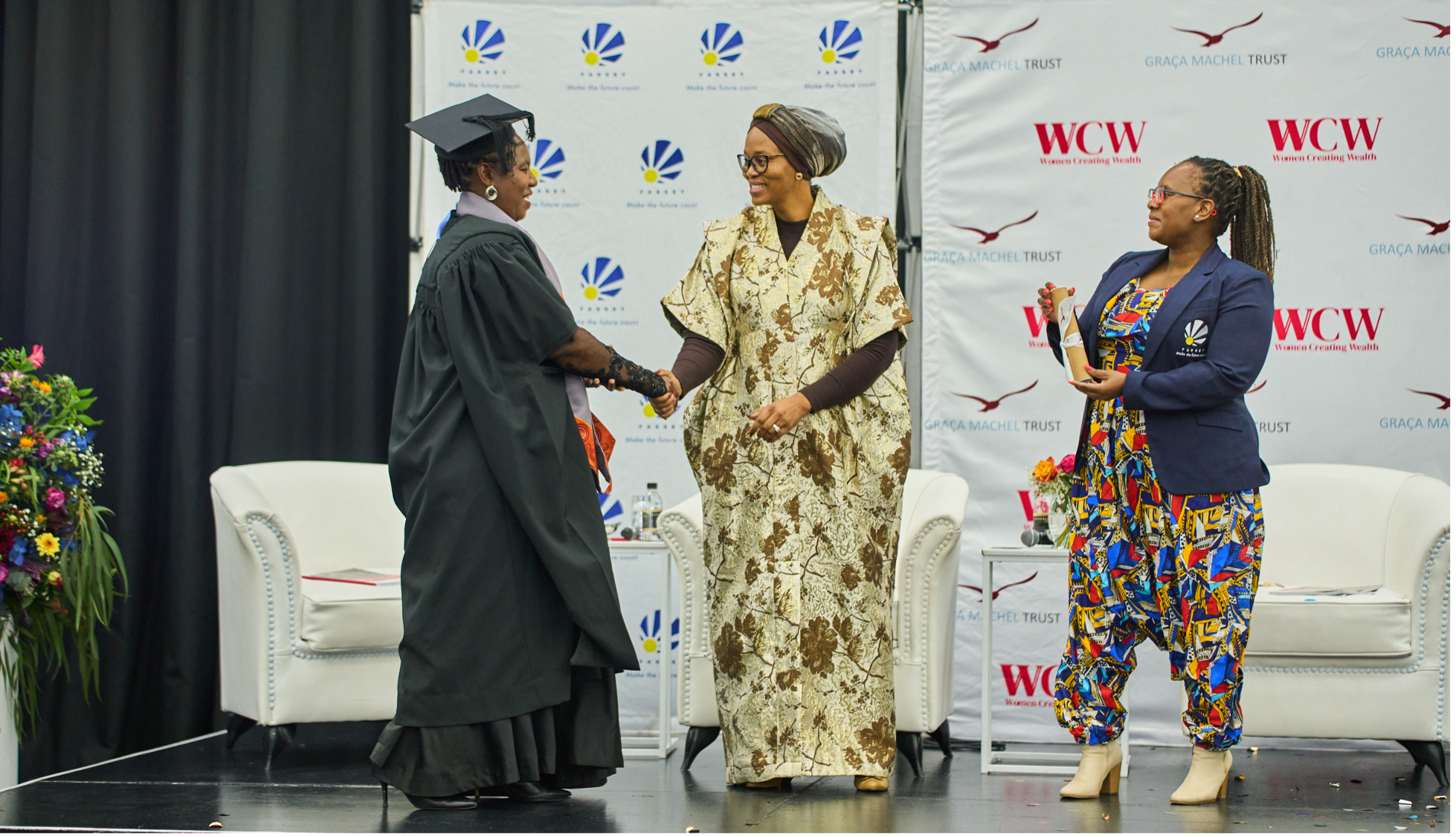
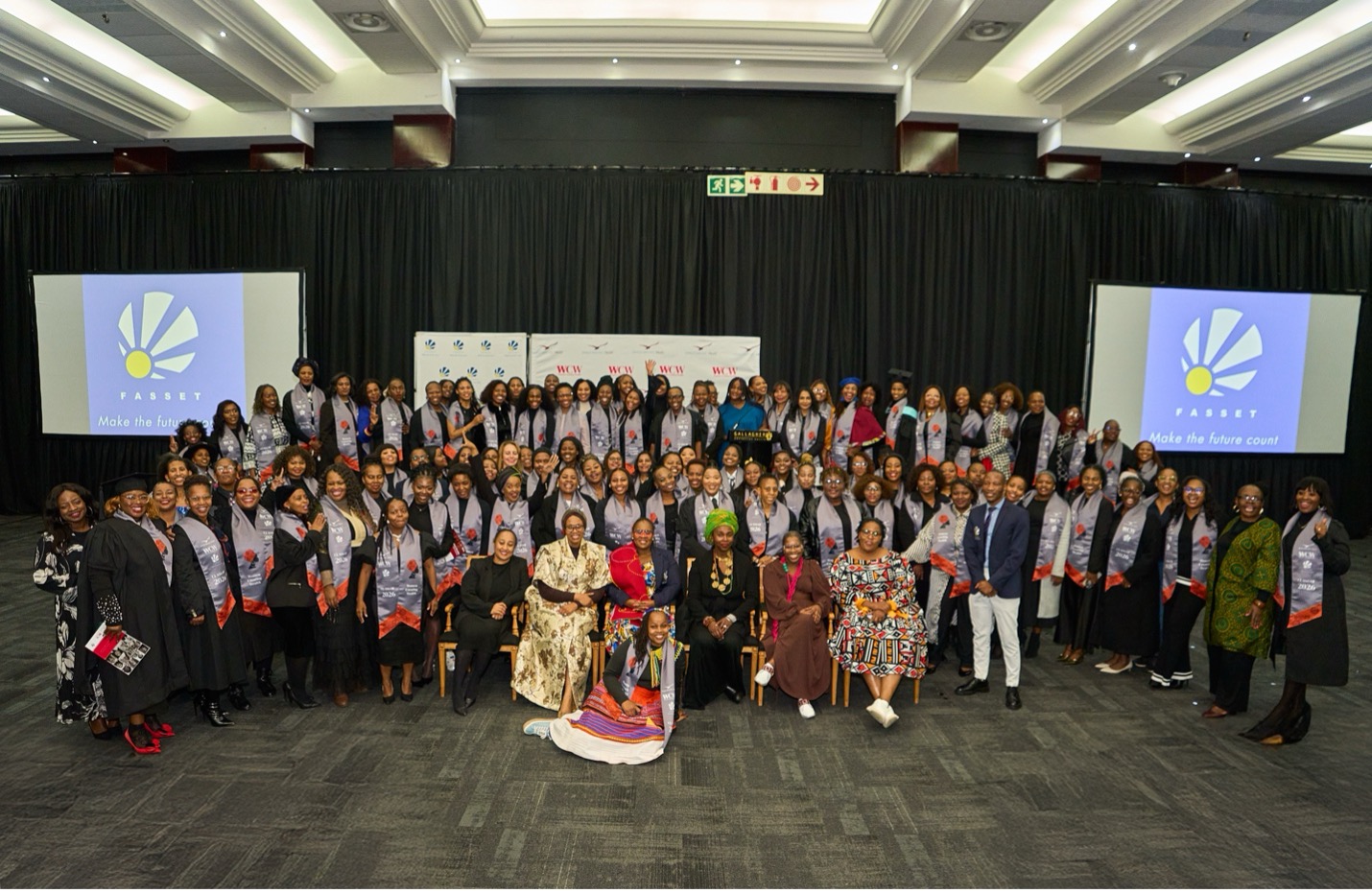
The Forum concluded with a certification and recognition ceremony celebrating the commitment of women who had invested time, effort, and courage in their businesses. It was a moment to acknowledge what had been completed and to affirm what comes next.
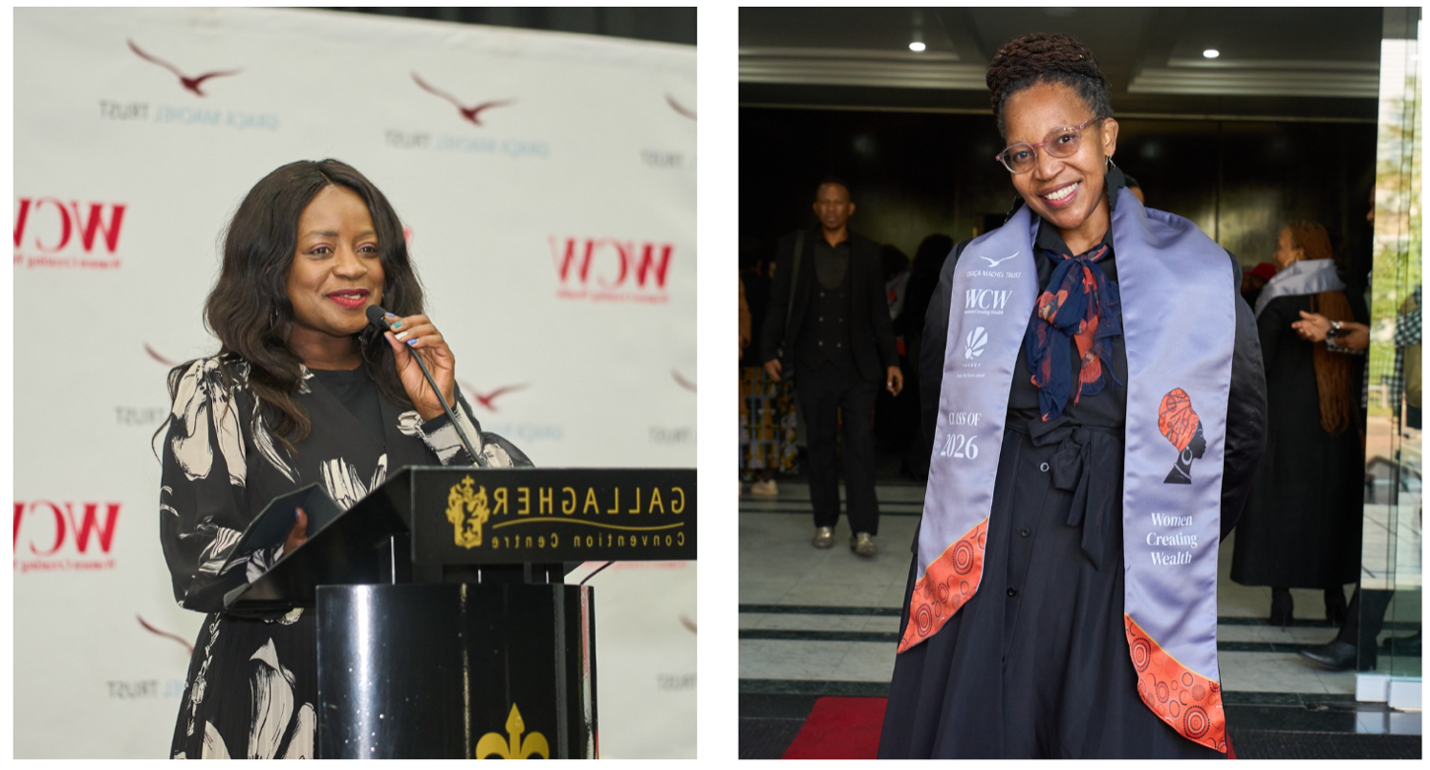
Tanya Ninganga-Kaponda (left), Programme Coordinator at the Graça Machel Trust and Master of Ceremonies for the Forum, leads the certification and recognition ceremony, celebrating the commitment, progress and achievements of women entrepreneurs in the Women Creating Wealth Financial Services Programme.
As this phase of the Women Creating Wealth Financial Services Programme concludes, its momentum continues through women who increasingly see themselves as economic leaders, businesses better positioned for growth, and partnerships that open new pathways to finance, markets, and opportunity. The Graça Machel Trust and its partners will build on these foundations in the programme’s next chapter, advancing an economy in which women are not only included, but can shape, own and lead it.
“When women create wealth, they do not create wealth alone. They create jobs, strengthen their families, support their communities and help build the nation.” – Shiphra Chisha, CEO Designate, Graça Machel Trust.
Authors:
About The Author
