
A study by the Centre for Competition, Regulation and Economic Development at the University of Johannesburg follows women entrepreneurs who were part of the Graça Machel Trust’s Women Creating Wealth Agricultural Value Chains project. Their stories show how women are finding routes into one of South Africa’s most concentrated industries.
South Africa’s poultry sector is dominated by a handful of large, vertically integrated firms. Most small producers sell into informal markets that are smaller and less stable, and closed industry networks make the formal market even harder for women to reach. The women featured in “Women Rising Above the Odds” found three different ways in.
Lebohang Dhludhlu of Nkanyezi Farming built her own route. An electrical engineer with a master’s degree in sustainable agriculture, she moved from backyard production to modern chicken houses and her own abattoir, with a five-year contract to supply schools in Mpumalanga. She is now working towards a feedmill that will make her operation almost fully integrated.
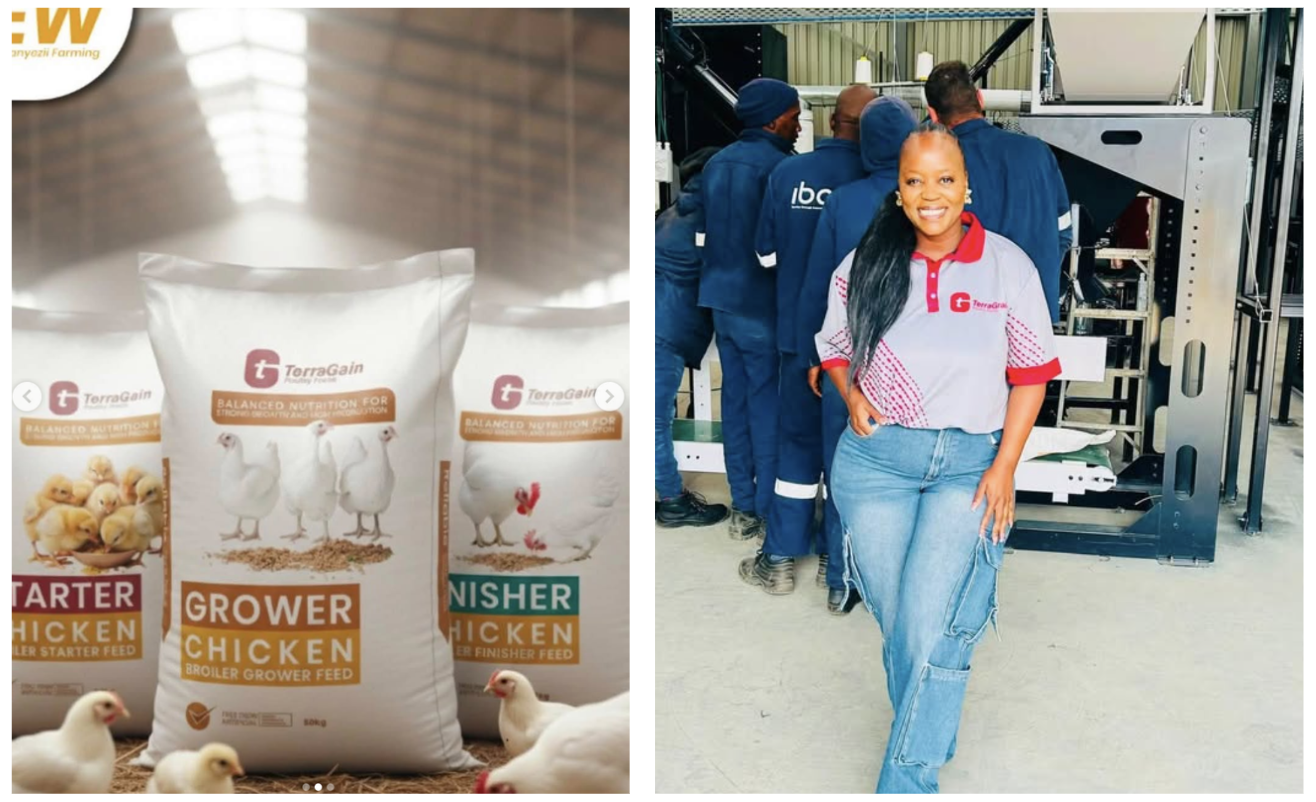
In 2021, Lebohang Dhludhlu bought and resold feed. By 2026, she was processing and selling her own, taking greater control of her poultry business. (Source: Instagram)
Phiwokuhle (Phiwe) Shabangu took the contract farming route. Rejected at first, she persisted until the Industrial Development Corporation (IDC) connected her with Astral Foods. The contract unlocked R100 million in IDC funding, and by 2025 her farm had capacity for 500,000 chickens per cycle.
“I started my journey with WCW as a new farmer, but through their comprehensive support in business development, personal mastery, and coaching, I gained invaluable skills and the confidence to grow my business.”
– Phiwokuhle Shabangu, Broiler producer, Gauteng
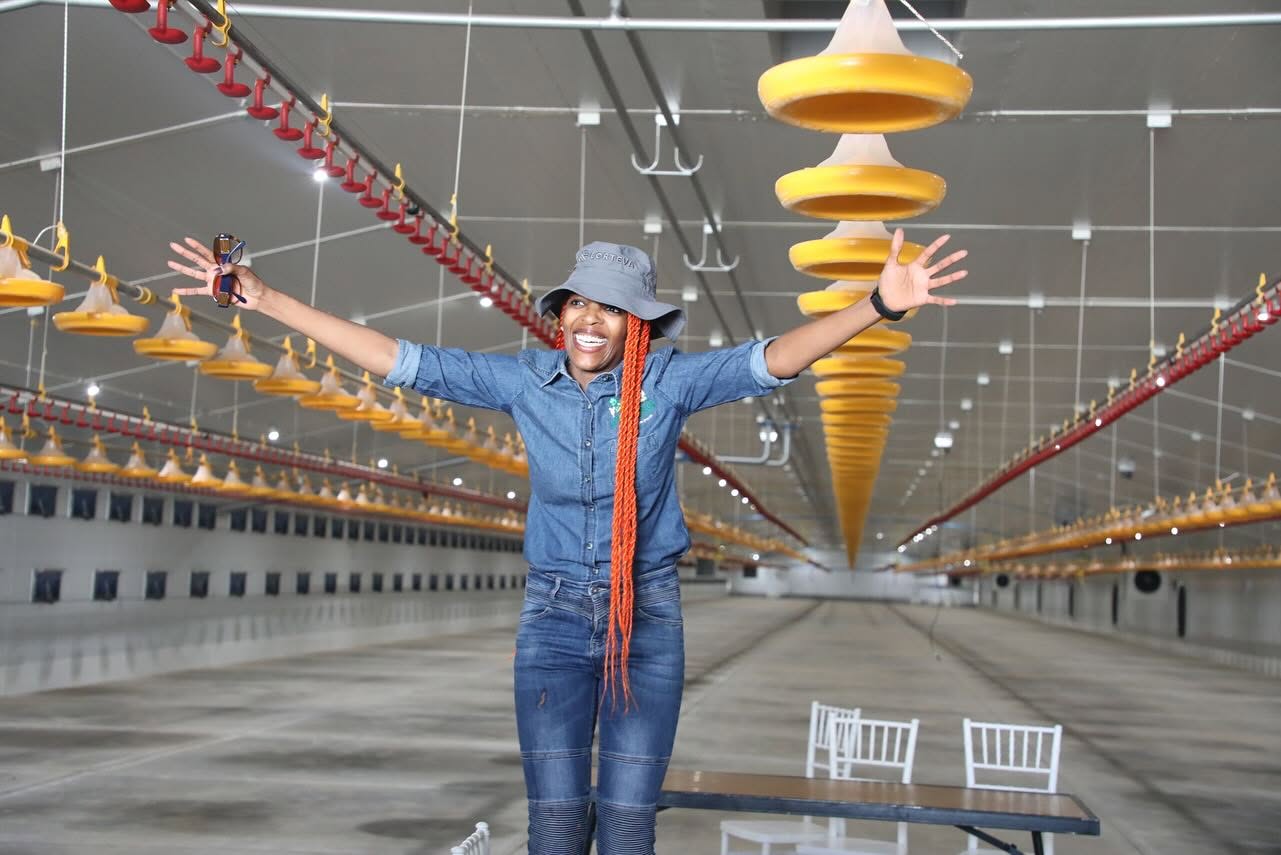
Phiwokuhle “Phiwe” Shabangu inside one of her poultry houses. Her persistence in securing an Astral Foods contract and IDC funding helped turn a small farming venture into a commercial poultry business. (Source: Facebook)
Zandile Maweni and four other young women chose the cooperative model. When their first application fell short, the funder gave them feedback rather than a rejection. They went on to raise R1.5 million from two funders, including the Small Enterprise Development and Finance Agency (SEDFA), and moved into an underserved egg market. Lungile Mkhize of Lungile Poultry Farm became a mentee of an established producer, and that relationship turned into a contract to supply 50,000 eggs a week. She also supplies Spar (a South African supermarket chain).
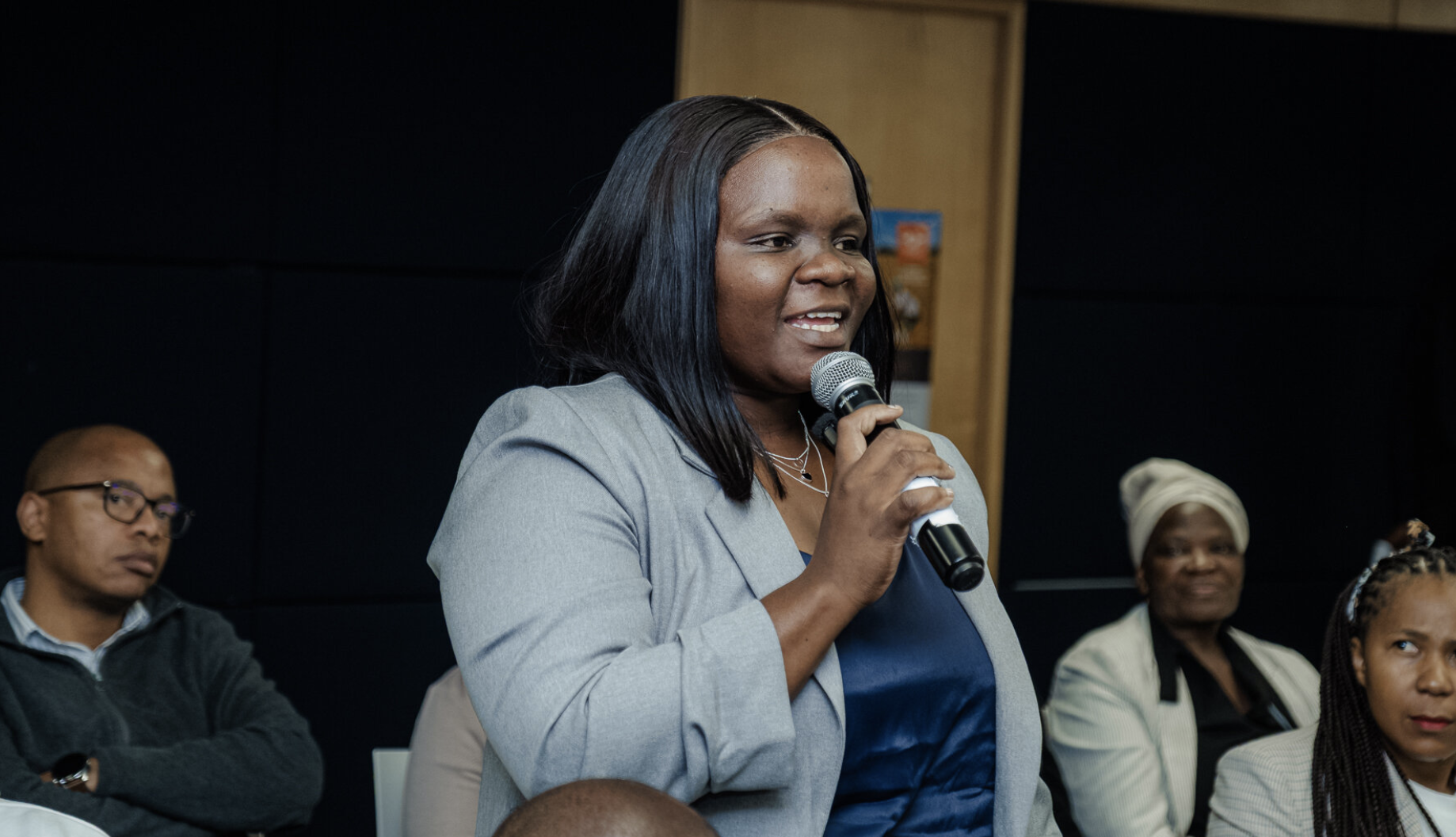
Lungile Mkhize of Lungile Poultry Farm speaking at the Graça Machel Trust and CCRED policy symposium at the University of Johannesburg on 17 April 2026, highlighting how funding gaps and unstable markets limit women farmers’ opportunities to grow.
Key lessons from poultry
- Contract farming and vertical integration are the main routes to scale. Contracts remain hard to secure, but with structured support, small producers can integrate across the value chain and keep more of the value they create.
- Patient funding changes outcomes. Funders who guide applicants rather than simply decline them help women become funding-ready.
- Affordable land needs matching finance. Permission-to-occupy land under traditional authorities opens the door, but banks and development finance institutions rarely fund infrastructure on it, leaving a “missing middle” that grants are too small to fill.
“Our experience has reinforced that building women’s entrepreneurial capabilities is only the beginning. Lasting impact comes from connecting those capabilities to markets, finance and collective action. The business growth and jobs achieved, alongside stronger platforms for women’s voices, demonstrate the importance of working at both enterprise and systems levels.”
– Korkor Cudjoe, Senior Entrepreneurship Manager, Graça Machel Trust
What comes next
Through the Women Creating Wealth business community, the Trust will continue to back women in poultry by promoting collective models that strengthen market access, bargaining power, and economies of scale. Alongside this, we are working with partners to push for finance that fits the realities of emerging producers. These women have shown what is possible. The next step is building the systems that make their success the norm.
Read the full study: Women Rising Above the Odds: Case studies of women in agricultural value chains in South Africa (PDF)
Led by the Centre for Competition, Regulation and Economic Development (CCRED) at the University of Johannesburg, under the Graça Machel Trust’s Women Creating Wealth Agricultural Value Chains project, co-funded by the European Union.
Authors:
Author
