
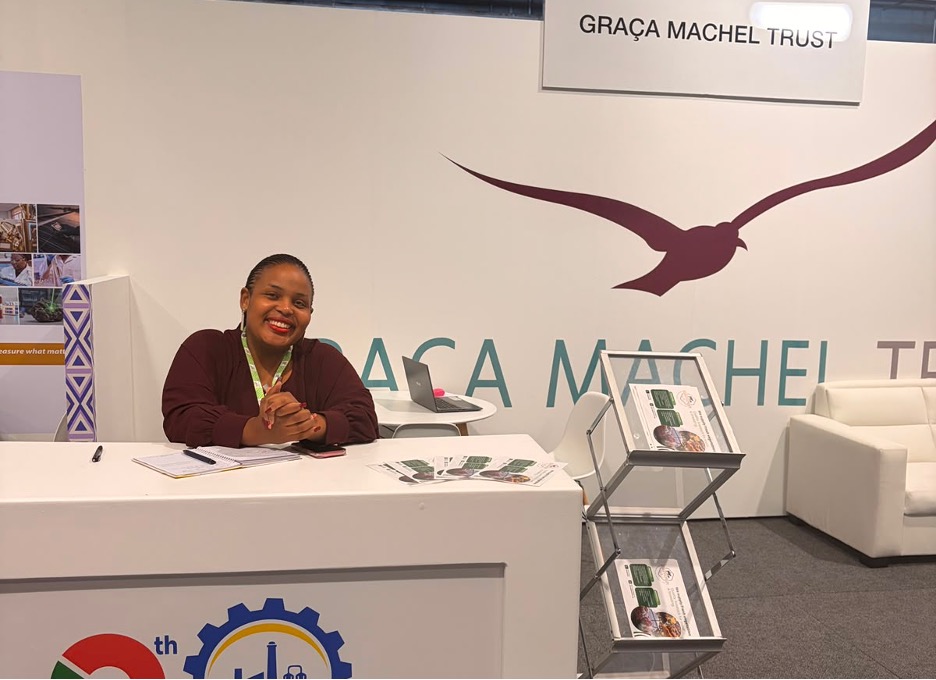
When Kedibone Nyamakazi, founder and Chief Executive Officer of AgriPremium stood at her exhibition space during the 9th Southern African Development Community (SADC) Industrialisation Week in Durban, she was not just showcasing her business. She was stepping into one of the region’s most influential platforms for trade, industrialisation and investment.
Based in Benoni, East of Johannesburg, Kedibone has built AgriPremium from a local agri-tech enterprise into a business with regional ambition. An educator, chef and award-winning entrepreneur, she is also an expert goat breeder specialising in Savanna, Red Kalahari and Boer breeds. Through AgriPremium, she delivers accredited agricultural training that equips farmers and emerging entrepreneurs with practical, recognised skills to participate more confidently in the agricultural economy.
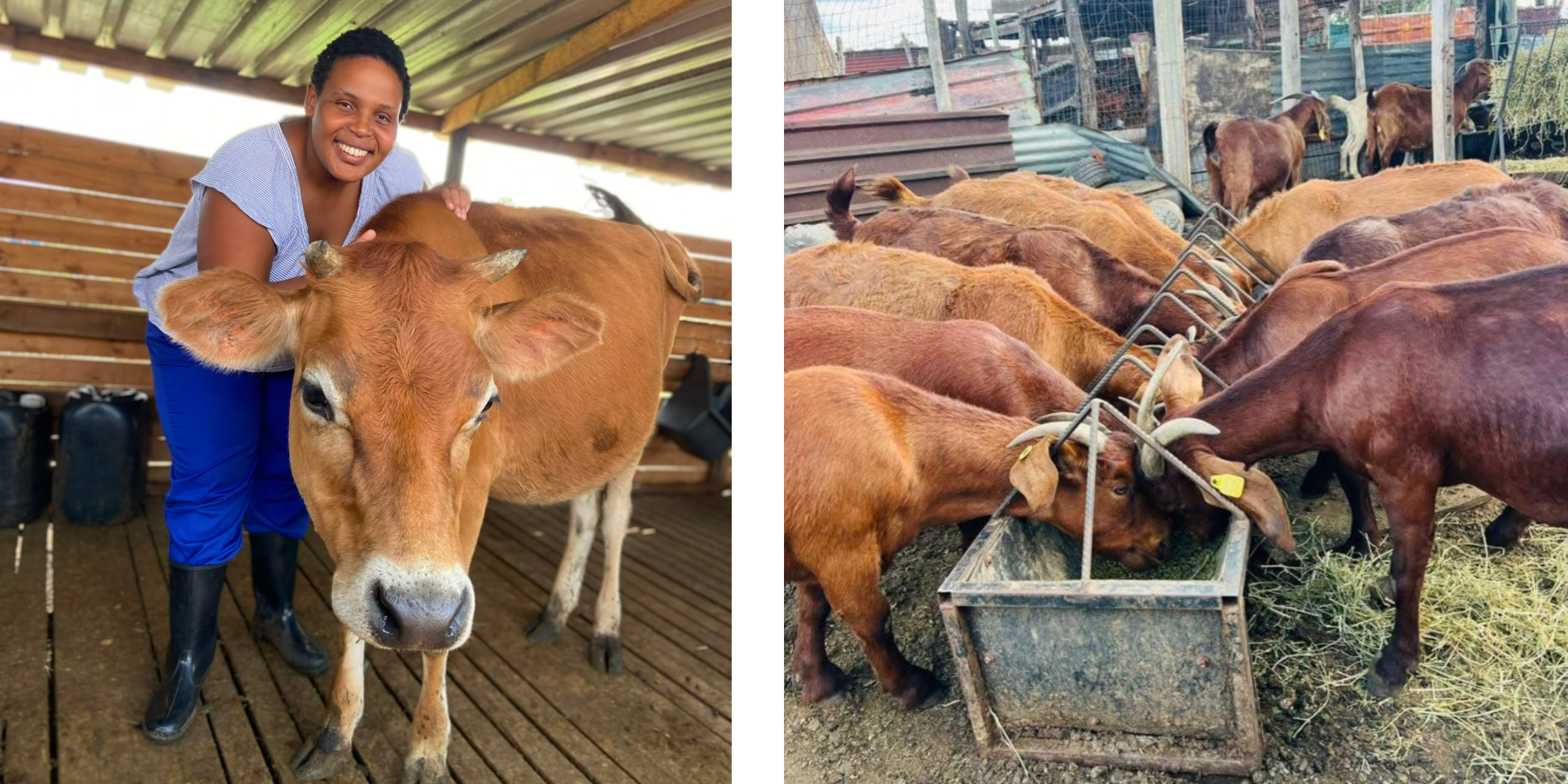
AgriPremium’s livestock work reflects Kedibone’s commitment to practical agricultural training, enterprise development and strengthening participation in the agricultural economy.
“Every farmer I train reminds me that agriculture is not just about land or livestock; it is about dignity, opportunity, and the chance to build something that can outlive you. I often ask myself: how do we make sure that the next generation of farmers doesn’t just survive in this sector, but truly thrives in it?”
A recent graduate of the Graça Machel Trust’s Women Creating Wealth Programme, Kedibone was selected to participate in SADC Industrialisation Week because her business sits at the heart of the event’s focus: agribusiness, regional value chains and inclusive industrialisation. Her experience in cross-border trade also made her participation especially relevant, bringing the voice of a woman entrepreneur who is already working to grow beyond local markets.
SIW brings together government leaders, policymakers, investors, development finance institutions, business associations, private sector leaders, entrepreneurs and development partners, creating opportunities for women entrepreneurs to move beyond local visibility and engage directly with regional trade and investment systems.
“Being at SADC Industrialisation Week gave me access to conversations I would not normally be part of as a small business. It showed me that agriculture is not just about production; it is about value chains, partnerships and positioning ourselves for regional markets.”
— Kedibone Nyamakazi, CEO, AgriPremium.
For entrepreneurs like Kedibone, access to such platforms is critical. Growth does not happen through training alone. It requires networks, exposure, market intelligence, buyer relationships, finance and the ability to compete beyond domestic markets.
This is why the Trust continues to create pathways for women entrepreneurs to access platforms like SIW. Through Women Creating Wealth, the Trust supports women to strengthen their businesses, build confidence, improve systems and prepare for growth. Equally important is connecting them to regional opportunities where their products and services can be seen, valued and scaled.
Speaking at SIW, Shiphra Chisha, Chief Executive Officer of the Graça Machel Trust, situated Kedibone’s participation within a broader vision for inclusive industrialisation. On the panel “Harnessing the Technology–Agriculture Nexus: Industrialising the Southern African Agricultural Value Chains towards Sustainable Trade, Export and Development,” she emphasised that women and young people are already active in agriculture and enterprise but remain underrepresented in higher-value segments of the economy.
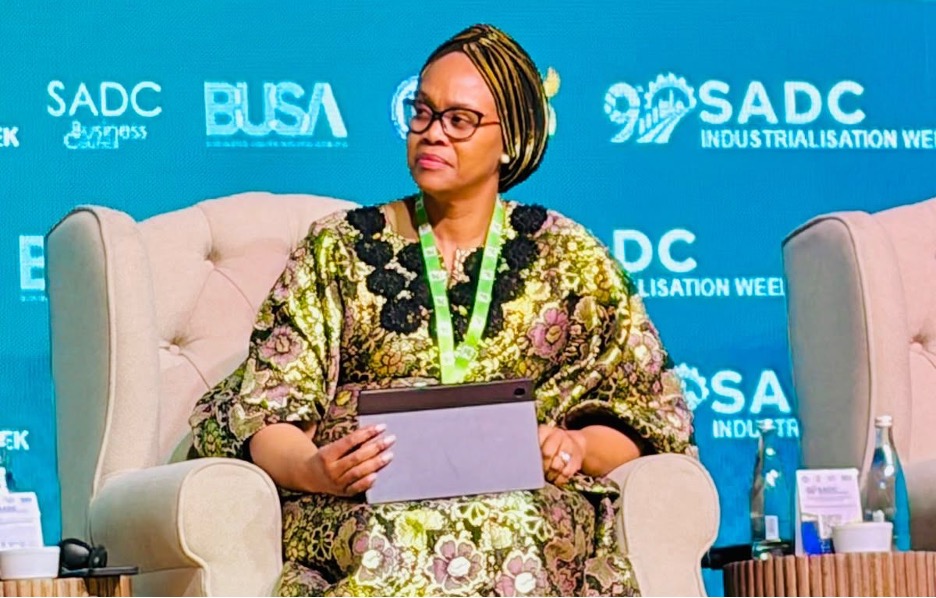
“By 2035, success should not be measured simply by higher agricultural production. It should be measured by how many women and young people own processing businesses, lead exporting companies, create decent jobs and participate competitively in regional and global value chains.”
— Shiphra Chisha, CEO, Graça Machel Trust.
Her message underscored that inclusive industrialisation must be intentional. Women entrepreneurs need access to finance, productive assets, digital tools, market information, quality standards, business development support and regional platforms that connect them to buyers and decision-makers.
For Christine Muyama, Advocacy Officer at the Graça Machel Trust, Kedibone’s participation reflects a key advocacy priority: ensuring women entrepreneurs are not only trained but included in decision-making and market-shaping spaces.
“Training and business development support are critical, but they are only one part of what women entrepreneurs need to thrive. They also need access to the spaces where decisions are made, partnerships are built, and opportunities are unlocked.”
— Christine Muyama, Advocacy Officer, Graça Machel Trust.
She added that platforms like SIW help shift perceptions of women entrepreneurs. “When women entrepreneurs are present in these spaces, they move from being viewed as beneficiaries of economic programmes to being recognised as key actors in shaping their economic future. This is about shifting systems, strengthening networks, and ensuring women-led businesses can access the markets and partnerships they need to grow.”
This shift is central to the Trust’s advocacy work. Across the continent, women entrepreneurs continue to face barriers to finance, market access, trade information and participation in decision-making spaces. While frameworks such as the African Continental Free Trade Area (AfCFTA) offer new opportunities, these will only translate into real growth if women-led enterprises are equipped, visible and connected.
The Trust’s engagement at SIW also included a panel on “Leveraging Cross-Border Trade and AfCFTA to Enhance Market Access and Competitiveness for Women and Youth in the SADC Region,” moderated by Thelma Bamhare, Project Lead at the Graça Machel Trust. The session focused on how women and youth-owned enterprises can become more competitive, export-ready and better integrated into regional value chains.
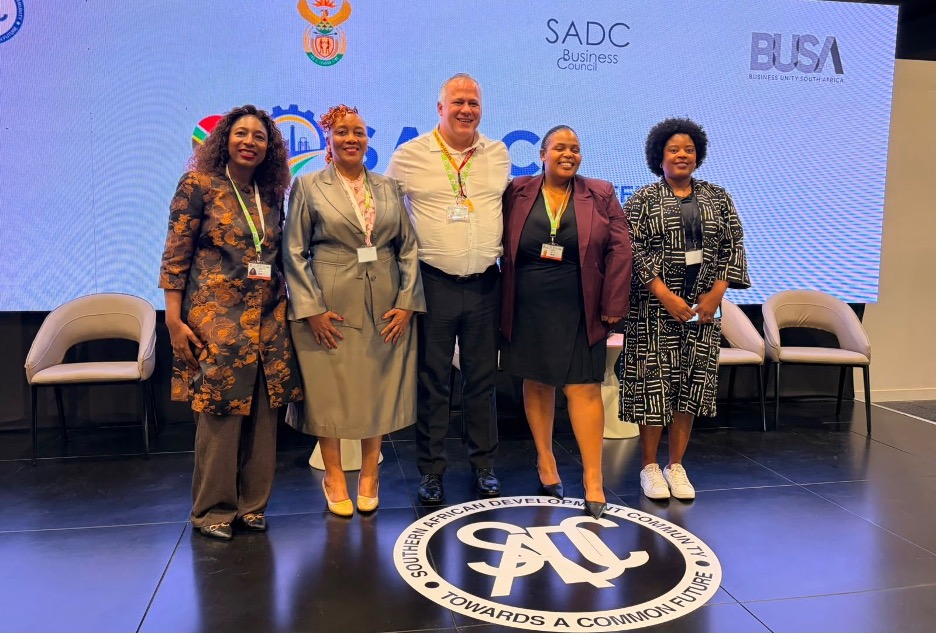
Thelma Bamhare, Strategic Partnerships and Programme Lead at the Graça Machel Trust, with Kedibone Nyamakazi and fellow panellists at the 9th SADC Industrialisation Week in Durban, where discussions focused on cross-border trade, AfCFTA, market access and competitiveness for women and youth.
Speaking on the panel, Kedibone reflected on the importance of regional exposure: “Being in spaces like SADC Industrialisation Week has shown me that my business is not just local. It has the potential to compete, learn and grow within a much larger regional market. What we need is continued access, support and visibility to make that possible.”- Kedibone Nyamakazi, CEO, AgriPremium.
The discussion highlighted practical requirements for competitiveness, including export readiness, product quality, packaging, labelling, market intelligence, standards, certification, finance, digital tools and stronger business networks. It also reinforced that quality should be seen as an enabler of market access, not a barrier.
Authors:
About The Author
