
“Even saying my name in class made my voice shake.” At 20, Elizabeth Masindet still remembers what it felt like to disappear in the classroom, long before she began supporting other girls through safe spaces that build confidence, resilience and leadership in communities where girls’ voices are often undervalued, and pressures like poverty and early pregnancy can narrow their choices about staying in school, finishing school, and shaping their futures on their own terms.
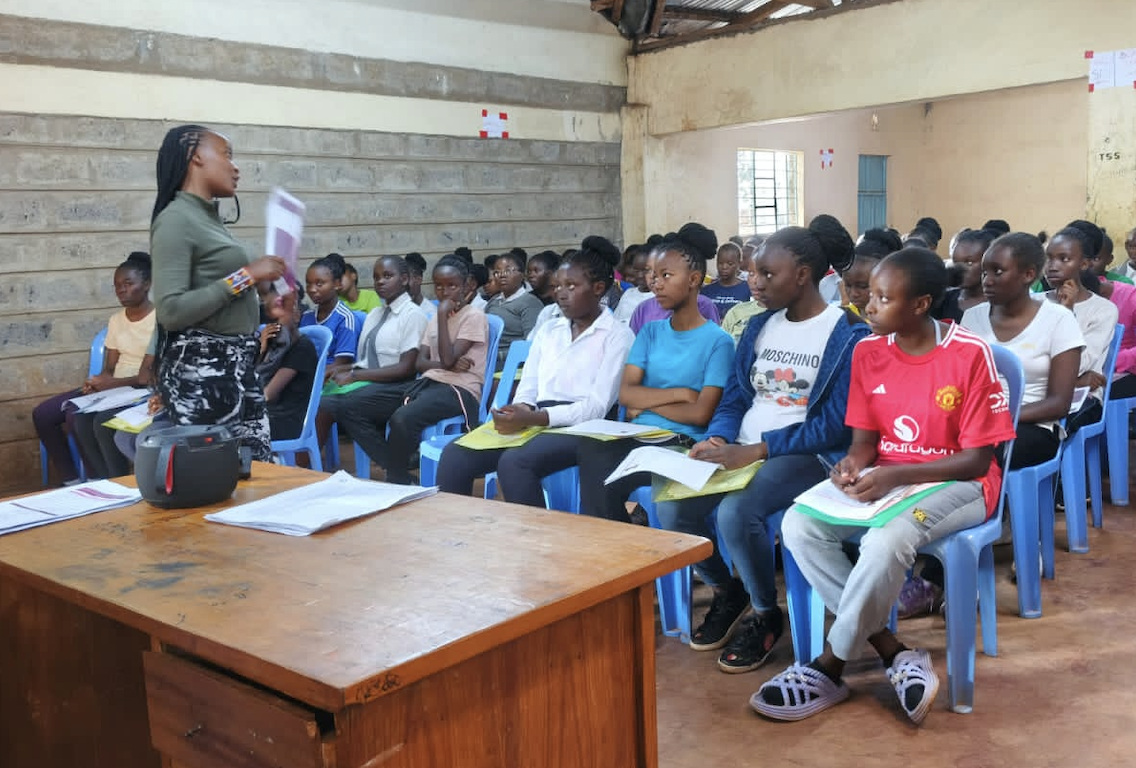
Elizabeth facilitates a safe-space learning session, guiding adolescent girls through a discussion on confidence, leadership and making informed choices, and creating room for every girl to speak, ask questions and be heard.
She grew up in Narok County, Kenya, where many families balance school with economic pressures at home. For girls, expectations to stay quiet can feel normal, even when they have something important to say.
Things started to change when younger girls began confiding in her about peer pressure and about feeling not “good enough.” “They trusted me even when I had little confidence in myself,” Elizabeth recalls. That trust pushed her to try something she had avoided for years.
She started with her school debate club. It scared her, but she returned repeatedly. “Courage is not about being fearless, but about choosing to speak despite the fear,” she says. Over time, the shaking eased, and her words began to land.
Elizabeth later joined the Graça Machel Trust’s Pan-African Adolescent Girls’ Movement, implemented in Kenya with the Forum for African Women Educationalists Kenya Chapter (FAWE Kenya). In 2025, FAWE Kenya supported five safe learning spaces across Narok, Kiambu and Elgeyo Marakwet, reaching 802 girls. Through guided learning sessions, girls explored self-discovery and goal-setting, built confidence and resilience, and developed practical leadership and entrepreneurial skills.
Now 20, Elizabeth is one of the young facilitators aged between 18 to 23, who have been trained to support the Movement by guiding other girls through the different programme modules alongside school patrons. She leads groups of 30 to 50 girls using role-plays, debates and storytelling, helping them practice speaking up, making decisions and building leadership skills in ways that connect to everyday life.
For Elizabeth, impact shows up in small shifts. She remembers one girl telling her, “I used to sit in silence in class, but now I can raise my hand.” Over time, girls began speaking more in class, choosing friendships that support their goals, and mentoring younger sisters at home.
Teachers and patrons help make that progress possible by creating consistent, safe spaces and staying close to girls’ needs. “Most of the girls in my area have shown significant improvement in confidently expressing their issues and the challenges affecting them,” says Pauline Masese, Project Lead at FAWE Kenya. “As a result, they are now able to seek and receive the support they need.”
Elizabeth no longer hides in the corner. She speaks with calm confidence, and she keeps returning to the same simple goal: helping girls practice the courage to use their voices at school, at home and in their communities.
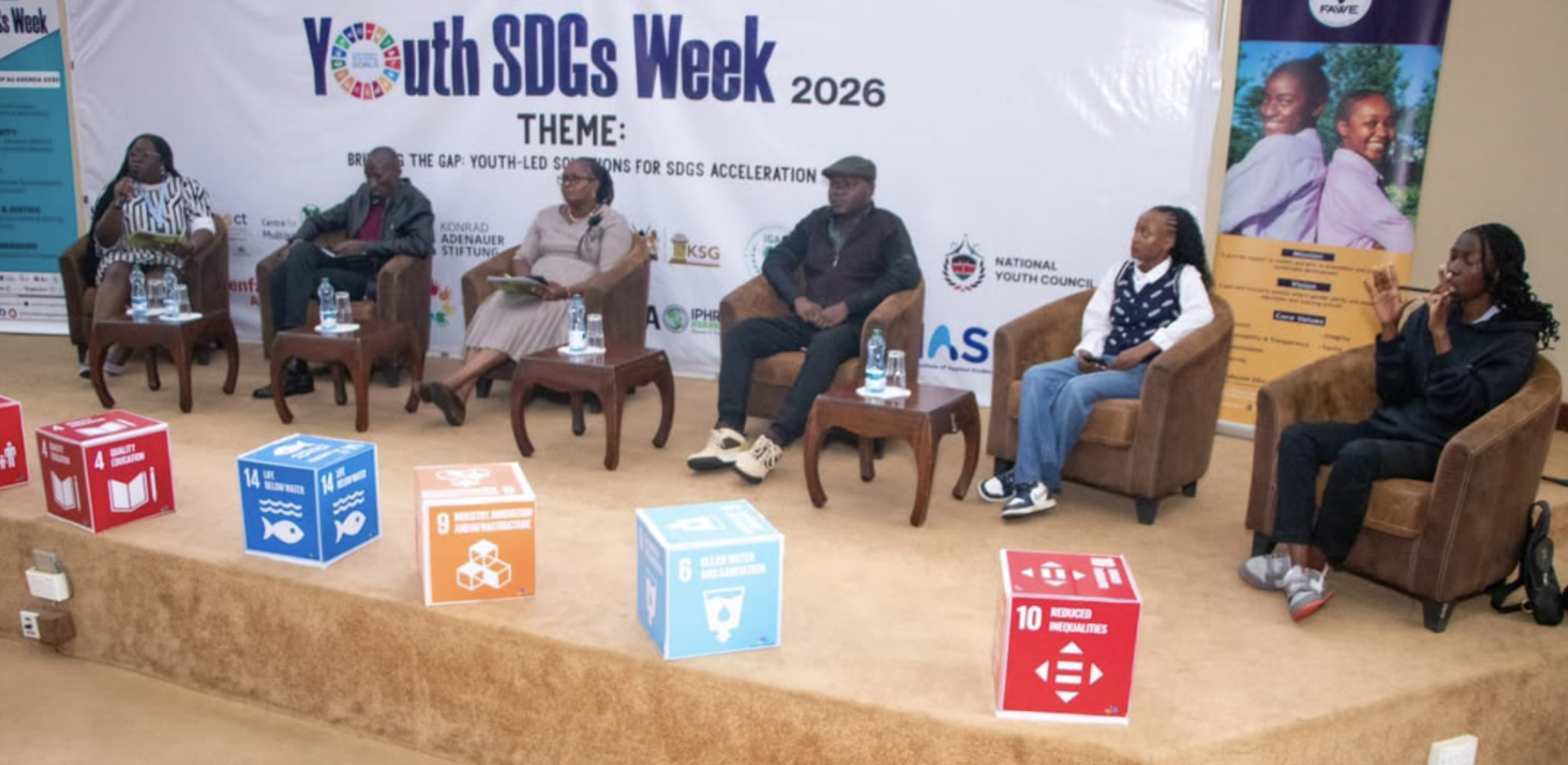
Elizabeth Masindet (white shirt, second from last) shared a youth perspective on “Bridging the Gap,” during this year’s Youth SGD Week in Nairobi Kenya, calling for more practical, skills-based education and stronger career guidance. Drawing on her experience with FAWE, she highlighted how confidence, leadership and communication grow when girls are given platforms to speak, and urged decision-makers to treat young people as partners in shaping inclusive education systems.
Authors:
About The Author
