
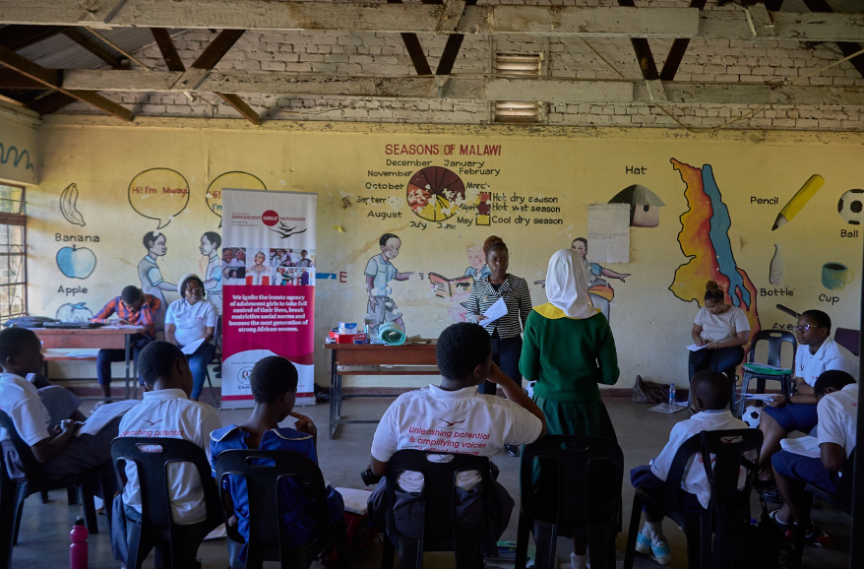
Faizana Ndala participates in a peer session, practising how to speak up and support others in Blantyre, Malawi.
In Blantyre, Malawi, many urban primary schools operate under real strain, with high demand for schooling, overcrowding, and severe economic pressure on families. In this context, the Graça Machel Trust’s Pan-African Adolescent Girls’ Movement creates safe spaces where adolescent girls can learn, build confidence, and practise leadership, with support from schools and community structures. This work matters in a country where child marriage remains common: UNICEF estimates that 38% of women aged 20–24 in Malawi were married before age 18.[1]
In Malawi, the Graça Machel Trust delivers the Pan-African Adolescent Girls’ Movement through its implementing partner, the Campaign for Health Education, Sanitation and Hygiene (CAHESH), working closely with schools and communities. Through the Pan-African Adolescent Girls’ Movement, girls meet regularly in Nests to learn together, support one another, and take on leadership roles in their schools and communities.
One of the girls reached by this work is Faizana Ndala, an 11-year-old learner at Chitawira Primary School in Blantyre, Malawi.
Faizana used to keep quiet even when she had something to say. “I always thought others were better than me,” she explains. “Even when I had something to say, I kept quiet.”
She first heard about the Pan-African Adolescent Girls’ Movement when the CAHESH team visited Chitawira Primary School to brief learners and staff. Faizana chose to join because she wanted to build leadership skills and support other girls.
Over time, Faizana began to see herself differently. “The training opened my eyes,” she says. “I realised I have a voice, and what I say matters.” For her, confidence was not a slogan. It became a skill she could practise week by week, speaking more, listening better, and helping others take part.
A turning point came when Faizana was selected as a peer facilitator. She felt nervous about speaking in front of other girls, especially on topics like confidence and leadership. Her first opportunity to practise came during a pilot launch event at a community hall, where girls from participating schools gathered. There, Faizana helped guide a session that reached 60 adolescent girls, creating space for honest conversations about girls’ rights, menstrual health, peer pressure, and safety, including sexual harassment.
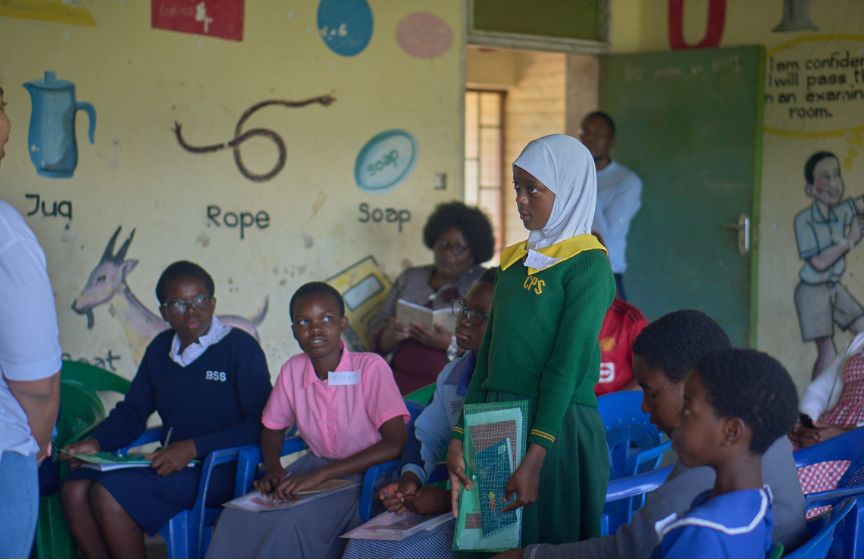
Faizana engages with other girls during a session focused on confidence, leadership, and safety in Blantyre, Malawi.
What mattered was the shift in where she was speaking. Faizana moved beyond familiar spaces like her classroom and school meetings, stepping into public settings with larger crowds and new faces. She later supported outreach sessions at other schools and community halls, where girls discussed peer pressure, sexual harassment, and how to make safe and informed choices. These conversations also opened doors for girls to engage community leaders. Girls met with chiefs, police, school management committees, parent representatives, and the Malawi Human Rights Commission, raising concerns about issues affecting adolescent girls, including child marriage.
Teachers observed the change in Faizana. According to her school’s senior teacher, Faizana’s confidence has “grown more in three months than it had in three years.” Faizana also describes a shift in how she sees her role among her peers. “I felt like I was doing something big, something that could change lives,” she says.
Faizana’s progress was strengthened by a wider circle of support. Teachers, parents, school health and nutrition coordinators, mother groups, and CAHESH staff helped girls build understanding, set goals, and practise leadership. Mother groups supported community discussions on personal hygiene and early marriage, while teachers and parents encouraged girls to attend sessions and outreach activities.
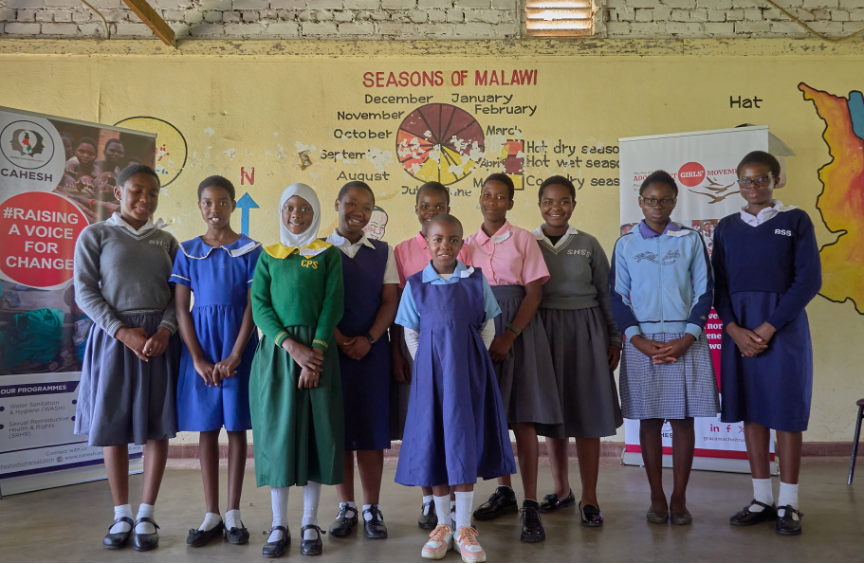
For Faizana, the change is now visible in everyday moments at school and in her community in Blantyre, Malawi. She speaks up more often, listens with purpose, and helps other girls take part in conversations that shape their safety, dignity, and futures.
Reference
[1] https://knowledge.unicef.org/data/resource/child-marriage-country-profiles
Authors:
Author
