
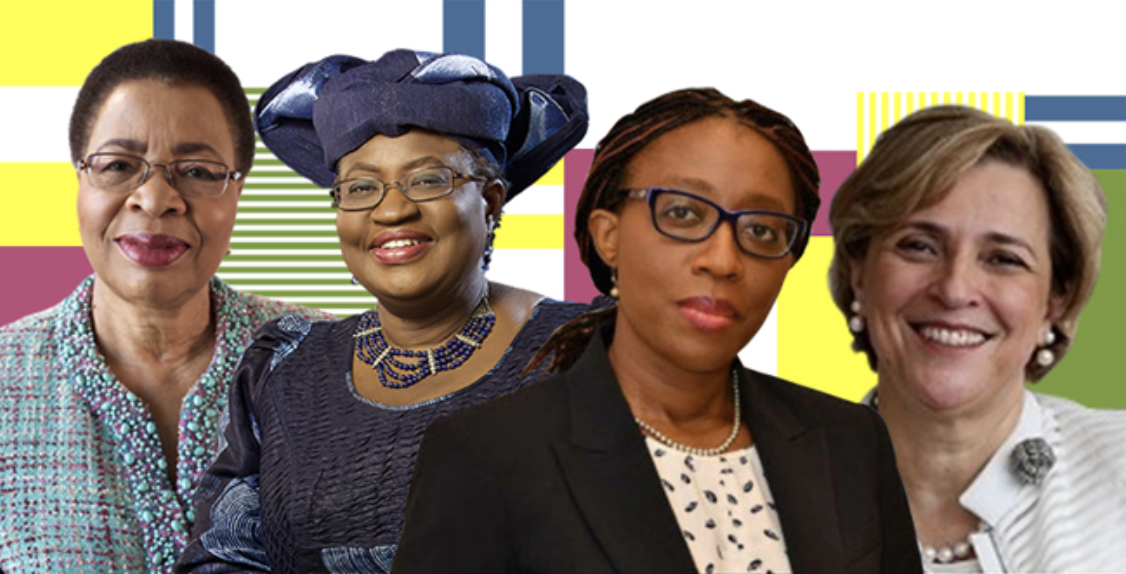
An Open Letter by: Graça Machel, Dr. Ngozi Okonjo-Iweala, Dr. Vera Songwe, Maria Ramos
“Times of Unprecedented Crisis Present Unique Opportunities for Unprecedented Action”
COVID 19 has unearthed massive inequalities within our societies and brought to glaring light the unique burdens which women carry the world over. Allocation of response resources should be targeted towards the immediate needs of managing the virus as well as future-looking to simultaneously dismantle the structural, systemic barriers which reinforce inequality and disenfranchisement. We have been presented the opportunity to reimagine and redesign our society into a vibrant and equitable one. We must place women and women’s leadership at the core of the response and beyond.
COVID-19 has caused massive shocks to both the informal and formal economies in Africa. World Bank estimates that the Sub-Saharan Africa region will see significant economic decline, and plunge to as low as -5.1% this year.
Women have been hit particularly hard by this economic downturn. Emerging evidence from the ILO on the impact of COVID-19 suggests that women’s economic and productive lives will be affected disproportionately. They have less access to social protections and their capacity to absorb economic shocks is very low.
As the economic toll of the crisis is felt, there is also an increased risk that female children will be forced into early marriages, and the number of child marriages and early pregnancy may increase as girls are turned into a source of quick income for families.
Given these shocks to society at large, it is no surprise that our food systems will be dealt a significant blow resulting in the dangerous exacerbation of food insecurity and nearly doubling current levels of widespread hunger.
COVID 19 has disrupted supply chains and thrown the global food economy into disarray. As border closures, production stoppages, and export restrictions limit supply, demand has surged, inflating prices and impacting the world’s poorest and most marginalized people, and Africa is no exception.
Women are central players in the food chain and key to agricultural output on the continent. 50% of the agricultural activity on the continent performed by women, who produce about 60-70% of the food in Sub Saharan Africa.
Studies reveal that the cost of malnutrition has a tremendous impact on a country’s economic growth. A lack of adequate nutrition is a key contributor to unacceptably high levels of both maternal and child mortality as well as stunting– and therefore to the loss of human capital for the overall economic, social and political development of the continent.
The fragility of African health systems is revealing itself and women and children are most vulnerable to the lack of attention and adequate specialized services the diversion COVID 19 is causing resulting in an anticipated surge in child and maternal mortality.
Domestic violence has increased by upwards of 25% in some countries as a result of lockdowns. Victims face limited access to protective services during periods of quarantine.
A Call to Bold Action:
- All Responses Must Take into Account Gendered Impacts of COVID and Be Informed by the Voices of Women: Women and women’s organizations should be at the heart of the COVID-19 response decision making and designing health and socio-economic policies and plans. An intentional focus on the lives and futures of women and girls is an essential part of breaking structural practices which have been marginalizing them. A system for collecting and disaggregating data needs to be put in place to ensure that the impact of the crisis on women is informing the redesign of fragile and inequitable socio-economic and health systems into fully inclusive, equitable ones.
- Government and Development Partners Must Implement Gender Lens Economic Policies and Sharpen the Capacity of Women as Engines of Economic Growth: Give women and female businesses direct access credit, loans, tax and social security payment deferrals and exemptions, and preferential procurement. Structural barriers to access to finance, inheritance, and land rights must be removed. Create and support the enabling environment for ICT infrastructure so rural and urban women are able to contribute to the digital economy and access online platforms to facilitate e-commerce and e-health/education/social exchanges.
- Invest in Women Along the Local Food Chains to Improve Food Security: Response resources should target female SMMEs and rural women associations to increase productivity in both formal and informal economies, eradicate hunger and malnutrition. Boost local food production and confront head on the indignity of Africa importing its food. Food security is a fundamental investment in the building of healthy societies.
- Recognize and Implement Equal Rights in the Workplace: Provide equal pay for equal work.
- Narrow Gender-based Education Gaps: Build ICT infrastructure for online learning to bridge the inequality divide and retrain teachers on virtual curriculum so every African child, especially the girl child, has access to quality education. Efforts to protect girls from child marriage and early pregnancy, and provision of safety net resources for households to keep girls in school are also needed.
- Strengthen Health Systems, Gradually Implement Universal Health Coverage (UHC) and Provide Mental Health Services needed as key strategies to the improvement of health systems and citizen wellbeing.
- Comprehensively Strengthen the Criminal Justice System and Increase Efforts Around Survivor Support and Protection: Prevention/protection efforts must be deemed as essential services and intentional mass media efforts to spur a fundamental change of mindset whereby GBV is rejected and deemed socially unacceptable and intolerable.
COVID-19 presents us with unprecedented opportunities for the regeneration of the African socio-economic landscape and the movement towards a just, equitable and sustainably prosperous continent. Let us dare not squander this opportunity for a rebirth.
Signed
Mrs Graça Machel
Founder, Graça Machel Trust and the Foundation for Community Development
Dr Ngozi Okonjo–Iweala
Board Chair, Gavi the Vaccine Alliance, AU Special Envoy to Mobilize International Economic Support for the Fight Against COVID-19, Former Finance Minister, Nigeria
Dr Vera Songwe
Executive Secretary, United Nations Economic Commission for Africa
Ms Maria Ramos
Co-Chair of the UN Secretary-General’s Task Force on Digital Financing of the Sustainable Development Goals and former Chief Executive Officer of Absa Group Limited
Read in French and Portuguese
Authors:
About The Author

